
Direct factory supply of certified activity monitors, hybrid pedometer timepieces, and connected biometric tracking hardware custom-tailored for Osaka buyers.
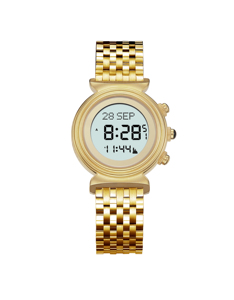
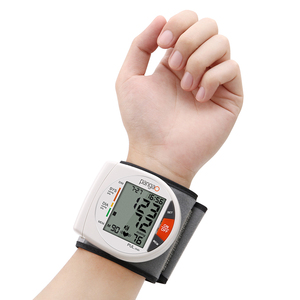
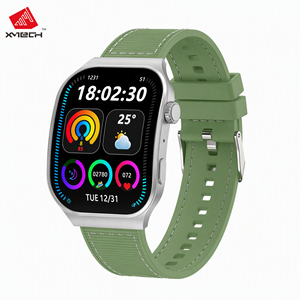
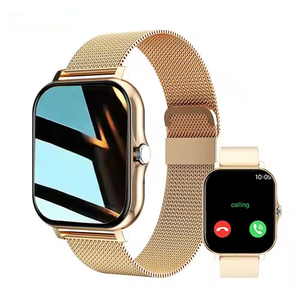
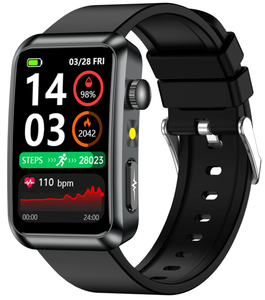
As the commercial capital of Western Japan prepares for Expo 2025 Osaka, Kansai under the overarching theme of "Designing Future Society for Our Lives," the demand for advanced, highly accurate biometric pedometers and step counting IoT hardware has reached an unprecedented peak. Japanese corporate wellness programs (Kenko Keiei - 健康経営), municipal senior mobility initiatives across Osaka Prefecture, and regional retail networks require wearables that exceed basic consumer expectations in sensor accuracy, radio compliance, and user privacy.
As an established hardware innovator with research roots dating back to 2011 and a recipient of prestigious design accolades including the iF Design Award (2014, 2015, 2016) and Computex d&i Award, our manufacturing facilities serve specialized procurement buyers, electronics importers, and corporate health managers across Osaka, Kobe, and Kyoto. We supply high-precision 3D accelerometer step counters engineered for rigorous Japanese market requirements.
Utilizing Bosch and STMicroelectronics tri-axis MEMS accelerometers paired with custom filtered signal processing algorithms to eliminate false-step data from car rides or subtle wrist gestures.
Full support for Japanese Radio Law compliance (TELEC / Giteki certification), ensuring seamless legal distribution across Kansai retail channels and corporate deployments.
In-house iOS and Android SDK customization, supporting native Japanese UI/UX, localized cloud servers (AWS Tokyo/Osaka regions), and compliance with Japan's APPI regulations.
Step counters are no longer mere standalone gadgets; they are key telemetry endpoints within connected health ecosystems. In Osaka, our OEM step counting platforms are deployed across four distinct strategic verticals:
Osaka-based conglomerates and SMEs in districts like Chuo-ku and Kita-ku utilize our bulk-customized step counter bands (such as the Tenvis HR and OmniBand series) for corporate health challenges. Custom firmware allows step data synchronization with health insurance association (Kenko Hoken Kumiai) point systems, incentivizing daily physical movement among office workers.
With Japan's rapidly aging demographic, municipal governments in Osaka Prefecture deploy simple, high-visibility step counters featuring extra-large LCD displays and long battery life (5–7 days or coin-cell options). These devices assist local community centers in tracking senior mobility, offering IP68 waterproofing for daily bathing and outdoor walking routines.
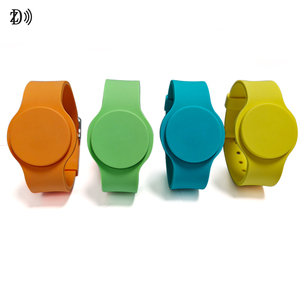
Tourism and urban development operators in Namba, Umeda, and Bay Area locations leverage customized NFC step tracking wristbands for interactive gamified city walking tours. Users rack up steps exploring cultural heritage sites, redeeming activity points at local merchant partners via 13.56MHz contactless sync.
To assist Japanese procurement directors in specifying hardware requirements, the table below contrasts our proprietary 3D MEMS pedometer architecture against conventional market entry-level step trackers.
| Technical Parameter | Standard Market Entry Step Tracker | Oaxis Premium OEM/ODM Pedometer Platform | Osaka Procurement Advantage |
|---|---|---|---|
| Sensor Technology | Single-Axis or 2D Motion Accelerometer | Bosch / ST Tri-Axis 3D MEMS Accelerometer | Zero false counts during subway riding (Osaka Midosuji Line) |
| Algorithm Filtering | Basic motion thresholding | Proprietary Active-Step™ cadence verification | Ignores random wrist movements; accurate walk cycle logging |
| Radio Certification | Standard FCC / CE only | TELEC (Japan MIC), Bluetooth SIG, CE, RoHS, REACH | Fully legal for commercial import and sale across Japan |
| Enclosure & Ingress | IP65 Splash Proof | IP68 Waterproof / 3 ATM Sealed Architecture | Durable against Osaka summer humidity and daily washing |
| Software Support | Generic English Third-Party App | Whitelabel iOS/Android App (Japanese Native) + SDK | Direct integration with local enterprise wellness portals |
Navigating hardware exports into Japan requires an intimate understanding of the regulatory landscape enforced by the Ministry of Internal Affairs and Communications (MIC) and the Ministry of Economy, Trade and Industry (METI).
1. TELEC (Giteki) Technical Conformity: Any step tracker utilizing Bluetooth Low Energy (BLE 4.2 / 5.0 / 5.3) radio transmission must obtain Technical Conformity Certification. Our factory works directly with accredited Registered Conformity Assessment Bodies to supply pre-certified radio modules or manage complete device TELEC filings for our Osaka partners.
2. PSE Mark for Lithium-Ion Batteries: Wearable step counters equipped with high-density rechargeable batteries must strictly comply with Japan's Electrical Appliance and Material Safety Law (PSE mark testing for energy density and battery protection circuits). Our battery cells undergo rigorous puncture, overcharge, and thermal shock testing prior to final pack assembly.
3. Data Privacy & APPI Compliance: Japanese consumers and corporate clients demand extreme diligence regarding personal health information (PHI). Companion application architectures engineered by our team adhere to strict data localization principles, allowing Osaka enterprise clients to host telemetry data on AWS Tokyo/Osaka infrastructure without foreign cloud routing.
Choosing an overseas OEM manufacturing partner requires verified evidence of quality management, operational longevity, and robust post-sale infrastructure. Our company stands as a beacon of reliability for Kansai-based distributors:
Founded in 2011, our design and engineering studio has consistently pushed the boundaries of consumer electronics, securing multiple iF Design Awards, Computex d&i Awards, and design patents. We build products that win awards and drive retail sell-through.
Every step counter batch undergoes 100% electrical testing, automated optical inspection (AOI), waterproof testing, and RF frequency calibration. We maintain a verified 98.4% outgoing QC pass rate, backing products with an enterprise 12-month limited warranty.
From initial industrial design concept and plastic injection tooling to custom firmware building, Japanese packaging design, and container shipment directly to the Port of Osaka (Osaka Nanko) or Kansai International Airport (KIX).
Yes, absolutely. We provide complete OEM packaging localization. Our design team creates Japanese color box artwork, inner tray dielines, and localized user manuals compliant with Japanese consumer labeling standards. Japanese typography and translation proofing are included in our standard onboarding process.
For standard production runs, manufacturing completed lead time is typically 25 to 35 days post sample approval. Sea freight from our primary shipping port to Osaka Nanko Port generally takes 4 to 7 days, while express air freight into Kansai International Airport (KIX) takes 2 to 4 business days.
Many of our core wearable platforms possess existing TELEC certification numbers. For custom ODM builds, our engineering team manages the complete TELEC testing and paperwork process through recognized labs (such as TELEC or DSP Research), supplying the Giteki mark directly on the product rating label and packaging.
Yes. We offer native iOS Swift and Android Kotlin SDKs alongside detailed API documentation for step data, calorie expenditure, walking distance, and historical sync routines. This enables your local software developers to integrate our hardware seamlessly into existing enterprise portals.
For customized silk-screen logo printing on existing hardware casing, our standard MOQ starts at 500 to 1,000 units. For fully customized colorways, specialized firmware, and custom box packaging, the MOQ is typically 2,000 units per SKU.
Partner with an award-winning wearable technology factory. Contact our global trade division today to discuss OEM/ODM step counter requirements for the Osaka and broader Kansai market.