Engineered by Oaxis for high-reliability commercial, retail, and healthcare deployments across Tashkent, Samarkand, and broader CIS markets.
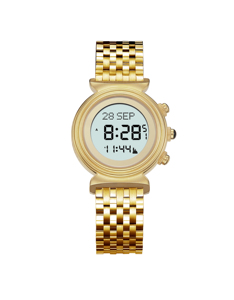
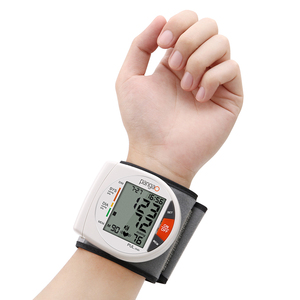
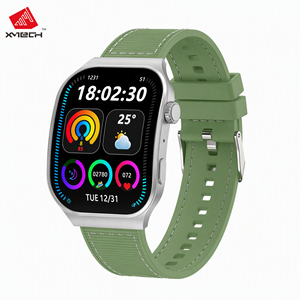
As Uzbekistan advances its digital infrastructure under the flagship "Digital Uzbekistan 2030" initiative, commercial enterprises and municipal sectors face a critical hardware bottleneck: standard TFT-LCD displays consume excessive electrical energy and suffer from acute legibility degradation under Central Asia's intense solar irradiance (average 2,800 to 3,200 hours of direct sunshine per year).
Our microencapsulated Ink Screen (E-Paper) displays solve this structural challenge through bi-stable optical mechanics. Unlike emissive liquid crystal displays, Electrophoretic Displays reflect ambient light—behaving precisely like physical ink on paper. Once an image is rendered, zero electrical power is required to maintain the display state. Power is drawn exclusively during pixel state transitions.
| Performance Metric | Oaxis Ink Screen | Standard TFT-LCD |
|---|---|---|
| Sunlight Readability | 100% Reflective (No Glare) | Poor (Requires >1000 nits) |
| Static Power Draw | 0.00 Watts | 12.5 - 45.0 Watts |
| Thermal Tolerance | -15°C to +50°C | 0°C to +40°C |
| Display Life Expectancy | > 10 Million Updates | ~ 30,000 Hours |
| Language Encoding | Uzbek / Cyrillic / UTF-8 | Standard Fonts |
From modernized hypermarkets in Tashkent to solar-powered transit stops in Samarkand, discover how Chinese Ink Screen hardware transforms localized business models.
Modern retail conglomerates in Uzbekistan are transitioning from manual paper tags to centralized Electronic Shelf Labels (ESL). Utilizing 2.13-inch to 7.5-inch multi-color Ink Screens (Black/White/Red/Yellow), store operators synchronize shelf pricing directly with ERP databases viaSub-1GHz wireless protocols, eliminating pricing mismatch errors during inflation adjustments.
Municipal public transport authorities in Samarkand and Bukhara require real-time passenger information displays where grid access is limited. Outdoor-grade 13.3-inch and 31.2-inch E-Paper signage modules operate continuously on micro solar panels, displaying live bus arrival times rendered crisp in both Cyrillic Uzbek and English scripts.
Medical centers across Uzbekistan are deploying battery-operated Ink Screen patient ID cards outside hospital rooms. Interfaced with hospital management systems (HMS), these devices display physician schedules, allergy alerts, and patient telemetry without bright nighttime screen glare, preserving patient comfort while ensuring clinical accuracy.
Trade velocity between China and Uzbekistan has expanded rapidly following the opening of direct railway freight corridors through Xinjiang and the growth of the China-Kyrgyzstan-Uzbekistan (CKU) transport link. This logistical revolution dramatically cuts transit times for electronic components from Shenzhen and East Asian manufacturing centers to Tashkent.
Key Market Drivers for B2B Importers & Enterprise Buyers:
Uzbekistan's national green transition directives require commercial venues to lower kilowatt consumption. Ink screen displays consume 90% less energy than emissive LCD displays, qualifying commercial projects for clean-tech rebates.
As Tashkent emerges as a premier Central Asian logistics hub, warehouses are adopting 4.2-inch bi-stable E-Paper picking tags to track pallet movements across wide-area industrial parks.
Modern enterprise buyers demand hardware with native font-rendering engine support for Latin Uzbek, Cyrillic Uzbek, and Russian typography at the MCU hardware layer.
Procuring Ink Screen units directly from established Chinese exporters eliminates intermediary markup margins while securing full engineering OEM/ODM support.
Rooted in over a decade of design innovations, recipient of international design accolades, and backed by stringent ISO quality systems.
Pioneered the world’s first E Ink dual-screen smartphone cases (InkCase series), earning multiple iF Design Awards and Computex d&i honors for structural optical integration.
Every batch undergoes 100% AQL optical screen inspection, high-voltage static stress testing, thermal cycling (-20°C to 65°C), and automated BLE signal calibration prior to export loading.
We provide comprehensive Android, iOS, and Linux SDKs alongside C-based microcontroller libraries to accelerate local app deployment for Uzbek engineering teams.
Everything you need to know regarding shipping routes, customs compliance, language integration, and bulk orders.
Connect directly with our senior hardware export specialists. Receive comprehensive engineering datasheets, factory wholesale pricing, and sample evaluation units shipped via express courier to Tashkent within 5-7 business days.