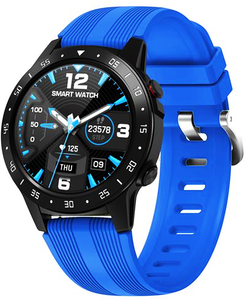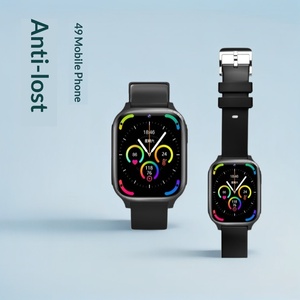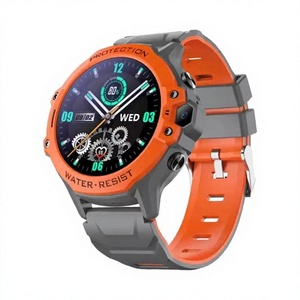
Featured cellular & GNSS location-based smartwatches engineered for pediatric safety, senior telecare, personal security, and industrial workforce management.
The global wearable positioning market has undergone a paradigm shift. Buyers are moving away from basic step-counting wearables toward multi-network hybrid telematics platforms equipped with advanced biometric monitoring, edge AI fall-detection algorithms, and encrypted cloud connectivity. For procurement directors, sourcing teams, and brand owners, navigating the landscape of Top Trusted GPS Watch Manufacturers & Suppliers requires looking beyond superficial casing aesthetics to evaluate fundamental hardware architectures, radio frequency (RF) design capabilities, firmware stability, and global regulatory compliance.
Modern wearable GPS platforms no longer rely solely on basic Global Positioning System (GPS) satellite constellations. Enterprise-grade units integrate Quad-System GNSS engines—combining GPS (USA), GLONASS (Russia), Galileo (EU), and BeiDou (China)—with Assisted GPS (A-GPS), Wi-Fi BSSID triangulation, and Cellular Base Station Positioning (LBS). This multi-tier telemetry stack enables sub-meter positioning accuracy outdoors while overcoming traditional indoor positioning dead-zones.
Information Gain Metric: Standard consumer-grade trackers experience indoor positioning drift of up to 150 meters. Premium OEM/ODM manufacturers mitigate this by implementing hybrid Wi-Fi sniffing and 3D barometric altitude sensing, reducing indoor horizontal location variance to under 5 meters and providing vertical floor-level identification.
As telecom providers decommission 2G and 3G networks across North America, Europe, and Asia-Pacific, strategic procurement requires a mandatory transition to 4G LTE Cat-1, LTE-M (eMTC), and NB-IoT (Narrowband IoT) cellular modems. Sourcing decisions must align with regional spectrum availability, device thermal management profiles, and power consumption constraints inherent to compact wrist-worn form factors.
A rigorous examination of core technical criteria when qualifying tier-1 GPS watch original equipment manufacturers (OEM) and original design manufacturers (ODM).
Integration of low-noise amplifiers (LNA) and high-sensitivity (-165 dBm tracking) receiver chips capable of parallel signal processing across GPS L1, GLONASS L1, and BeiDou B1 bands for rapid Cold Start Time-To-First-Fix (TTFF < 35 seconds).
Firmware-level power scaling featuring intelligent motion-gated sleep states. By pairing 6-axis MEMS accelerometers with adaptive reporting intervals, battery longevity expands from 24 hours up to 120 hours under standard operation protocols.
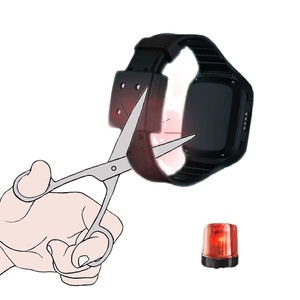
For judicial, parole, or specialized institutional applications, hardware builds incorporate optical wrist-detection sensors, conductive cut-strap loops, and anti-tamper enclosure switches triggering instant encrypted cloud alerts upon unauthorized removal.
Comparing positioning technologies across operational environments to inform channel sourcing specifications:
| Positioning Mode | Typical Accuracy | Operational Environment | Power Consumption | Primary Use Case |
|---|---|---|---|---|
| Direct GNSS (GPS/GLONASS) | 2.5m – 10m | Open Outdoor Environments | High (30–45 mA) | Real-time active routing, outdoor sports, child tracking |
| A-GPS (Assisted GPS) | 5m – 15m | Urban Canyons / Partial Canopy | Medium (Fast TTFF lock) | Rapid emergency SOS location dispatch |
| Wi-Fi BSSID Triangulation | 10m – 30m | Indoor Malls, Schools, Dense Cities | Low (8–15 mA) | Indoor non-GPS tracking, geofence monitoring |
| LBS (Cellular Tower ID) | 100m – 2000m | Deep Indoor / Dense Basements | Very Low (< 5 mA) | Fallback positioning when satellite signal is obstructed |
| BLE Micro-Beacons | 1m – 3m | Designated Facilities & Hospitals | Ultra-Low (< 2 mA) | Patient monitoring, indoor room-level tracking |
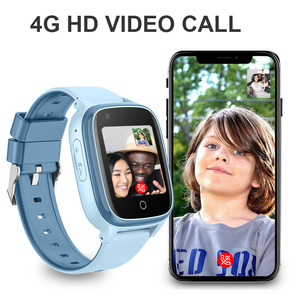
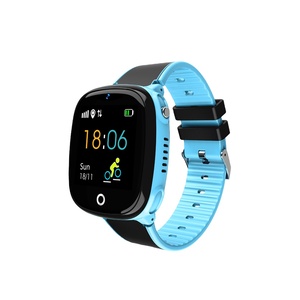
In the consumer retail sector, kids GPS smartwatches require specialized hardware and software configurations. Essential feature sets include VoLTE high-definition voice calling, wide-angle front cameras for two-way video communication, IP67/IP68 immersion protection against water exposure, and dedicated hardware SOS panic triggers. Crucially, the companion mobile application (iOS/Android) must adhere strictly to international data privacy legislation, including the Children’s Online Privacy Protection Act (COPPA) in the USA and General Data Protection Regulation (GDPR) compliance in Europe, utilizing AES-256 end-to-end data encryption for all telemetry transmitted to backend servers.
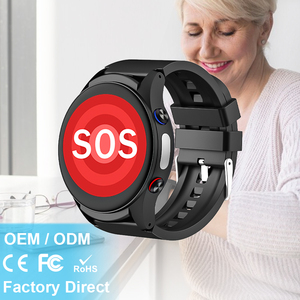
Designing positioning hardware for senior care demands the integration of advanced health-monitoring biometrics alongside location telemetry. Tier-1 manufacturers incorporate photoplethysmography (PPG) optical sensors capable of continuous Heart Rate (HR), Blood Oxygen Saturation (SpO2), and non-invasive Blood Pressure estimation. A critical differentiator in this category is the inclusion of embedded 3D gyroscopic Fall Detection algorithms. When an abrupt downward vector followed by impact inertia is detected, the wearable automatically initiates a emergency cascade: sending SMS alerts, transmitting pin-point GPS coordinates, and placing sequential auto-dial calls to emergency contacts or medical monitoring dispatch hubs.
Institutional procurement demands specialized structural engineering. Tamperproof GPS watches utilize medical-grade hypoallergenic TPU or steel-reinforced elastomer bands with embedded conductive fibers. The electronic enclosure features hermetically sealed IP68 casing to withstand continuous submersion and harsh environments. Integrated wrist-skin temperature sensors combined with optical proximity channels ensure continuous human contact, immediately reporting anti-circumvention attempts to central monitoring software via encrypted cellular channels.
As the smart wearable ecosystem evolves, enterprise procurement strategies must align with long-term technological trajectories to prevent inventory obsolescence. Leading manufacturers are investing heavily in four transformational hardware domains:
5G Reduced Capability (RedCap) chipsets will replace legacy LTE Cat-1 modems. RedCap offers lower latency, improved power efficiency, and seamless connectivity within 5G standalone networks while maintaining the small form factor required for wristwear.
Physical Nano-SIM card slots are being phased out in favor of eSIM (embedded SIM) and iSIM (integrated SIM within the main SoC). This removes structural casing apertures, dramatically improving IP68 waterproofing while enabling remote over-the-air (OTA) carrier profile provisioning.
On-device neural processing units (NPUs) allow AI models to analyze motion kinematics locally. This enables instant offline fall detection, swimming stroke identification, and predictive battery optimization without relying on continuous cloud computing.
Supply Chain Foresight: Sourcing managers should select manufacturing partners with established eSIM chip-on-board (CoB) sourcing capabilities and existing carrier certification pipelines to minimize market entry friction across different target regions.
Expert guidance resolving critical procurement, engineering, and supply-chain queries encountered during manufacturer evaluation.
Standard white-label OEM orders featuring custom logo printing, customized silk screening, and bespoke retail box packaging typically start at 500 to 1,000 units per SKU. Deep ODM projects involving customized plastic injection tooling, unique industrial design modifications, or specific PCBA board layouts generally require an initial batch MOQ of 3,000 to 5,000 units to amortize tooling and NRE (Non-Recurring Engineering) expenses.
Cellular GPS watches utilize region-specific modem variants. A standard manufacturer platform will offer distinct RF configurations: North American Band Spec (B2/B4/B5/B12/B66/B71), European/Asian Band Spec (B1/B3/B7/B8/B20), and Latin American Band Spec (B1/B3/B5/B8/B28). Top suppliers assist clients in selecting the precise module hardware to ensure seamless registration on target mobile network operators (MNOs).
Primary regulatory requirements include CE-RED (Radio Equipment Directive) for Europe and FCC ID (Part 15/22/24/27) for North America. Additionally, materials must comply with RoHS 2.0 and REACH hazardous substance standards due to direct skin contact. Products incorporating Bluetooth protocols require mandatory Bluetooth SIG EPL qualification. Specialized markets may demand localized certificates such as UKCA (UK), TELEC/MIC (Japan), KC (Korea), or NCC/BSMI (Taiwan).
Yes. Professional OEM/ODM manufacturers provide robust backend integration pathways. Buyers can choose between: (1) Applying custom white-label skinning (branding, color palettes, localized language translations) to the manufacturer’s existing production app; or (2) Accessing open RESTful APIs and WebSocket data streams to connect raw GPS packet feeds directly into the client's proprietary enterprise cloud software.
Tier-1 GPS watch manufacturing follows strict Quality Assurance (QA) protocols: Automated Optical Inspection (AOI) on SMT lines; 100% In-Circuit Testing (ICT) of PCBAs; RF active power and sensitivity measurement in shielded chambers; pneumatic IP67/IP68 water-tightness pressure testing; high/low-temperature thermal chamber aging (-20°C to +60°C); drop and vibration simulation; and final Outgoing Quality Control (OQC) AQL sampling prior to master carton sealing.
Repeat production orders of standard SKUs ship within 25 to 35 calendar days following deposit receipt and artwork sign-off. Initial custom OEM orders requiring specialized color matching, customized firmware builds, or complex packaging proofs typically require 40 to 50 days. Full ODM projects involving plastic tooling fabrication, T1 sample approval, and regulatory testing require a 90 to 120-day timeline.
Whether you require market-ready 4G kids smartwatches, senior fall-detection health monitors, or custom ODM hardware engineering, our expert team is ready to support your sourcing requirements.