
Discover certified, medical-grade ready smart wearable monitors engineered with high-precision optical sensor arrays, continuous BP estimation algorithms, and seamless cloud telemetric syncing.
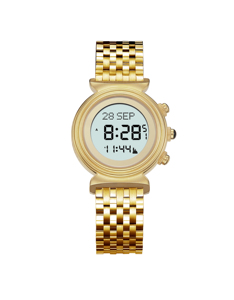
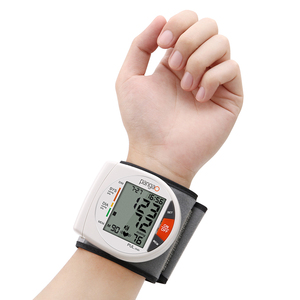
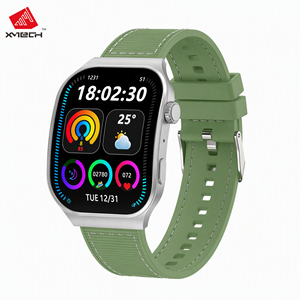
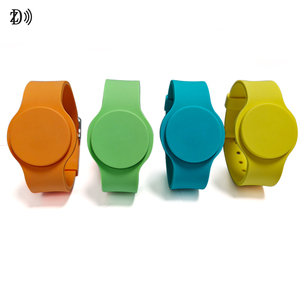
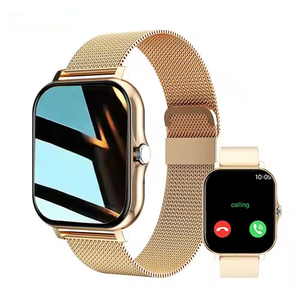

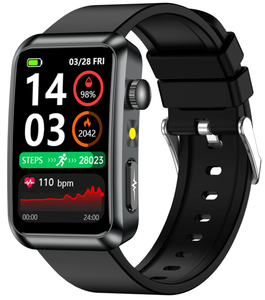
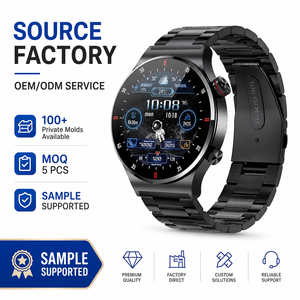
From micro-optical pathway design to embedded firmware and HIPAA-compliant cloud SDK integration, our engineering ecosystem delivers market-ready bio-telemetry devices designed for international compliance.
Our bio-sensing platforms incorporate multi-spectral LED clusters (Green, Infrared, Red wavelengths) paired with high-sensitivity photodiode matrixes to filter out motion artifacts and optimize signal-to-noise ratio (SNR) across all skin tones.
We supply white-label iOS and Android SDKs alongside customizable companion apps. Firmware updates are pushed OTA (Over-The-Air) with ongoing OS compliance patches maintained directly by our core developer team.
Engineered to satisfy stringent global regulatory frameworks. Every production lot undergoes rigorous compliance verification for CE RED, CE MDR standards, FCC Part 15, RoHS 2.0, REACH, and Bluetooth SIG qualification.
Honored by four prestigious international design awards (including iF Design Award and Computex d&i Award), our engineering team balances ergonomic, IP68 water-resistant structural design with consumer-grade aesthetics.
Operating under strict ISO 9001 and ISO 13485 manufacturing environments, 100% of finished units are electrically tested, pressure-chamber water tested, and sensor-calibrated before final automated cartoning.
Standard SKU repeat orders ship within 25–35 days. OEM customized builds receive dedicated account management, custom packaging dieline tooling, continuous spare parts replenishment, and a 12-month warranty framework.
Cardiovascular health monitoring has transitioned rapidly from episodic clinical measurements conducted in hospital settings to continuous, non-invasive bio-telemetric tracking embedded into daily consumer wearables. For overseas distributors, medical device brands, and digital health solution providers, selecting the right manufacturing partner in China requires an in-depth understanding of optical sensor architecture, digital signal processing (DSP), regulatory compliance, and software ecosystem integration.
As a leading pioneer in bio-sensor integration and smart wearable engineering, our manufacturing operations bridging Singapore R&D design philosophy with Shenzhen’s world-class electronic manufacturing ecosystem provide enterprise clients with unprecedented technical reliability and supply chain agility.
Key Technological Baseline: Modern heart monitoring devices must balance high-fidelity optical sampling rates with micro-ampere power consumption. Achieving clinical-grade photoplethysmography (PPG) requires optimized optical pathway geometry, low-noise analog front-ends (AFE), and real-time motion artifact suppression.
When specifying a cardiac monitor for OEM/ODM development, product managers must select between photoplethysmography (optical sensing) and electrocardiography (electrical impulse sensing)—or integrate hybrid dual-modal architectures:
Photoplethysmography (PPG): PPG sensors operate by emitting light wavelengths (typically 525nm Green for surface micro-vascular capillary flow, or 660nm Red / 940nm Infrared for deeper blood volume pulse and SpO2 calculation) into the cutaneous tissue and measuring the reflected intensity variations caused by arterial pulsation. Our manufacturing infrastructure utilizes multi-spectral emitter arrays combined with silicon photodiode arrays isolated by optical barrier walls to prevent internal light leakage and crosstalk.
Electrocardiography (ECG): ECG technology measures the biopotential voltages generated by the depolarization and repolarization of the heart muscle during each cardiac cycle. By embedding medical-grade 316L stainless steel or titanium-coated electrodes into the bezel and case-back of smartwatches, our single-lead and multi-lead ECG devices capture P-waves, QRS complexes, and T-waves, enabling advanced edge-AI algorithms to detect Atrial Fibrillation (AFib), premature ventricular contractions (PVCs), and sinus rhythm abnormalities.
The primary bottleneck in wearable cardiac monitoring is motion artifact contamination. Wrist movements, muscular tremors, and changing ambient lighting induce ambient noise that can distort PPG signals, resulting in false arrhythmia alerts or inaccurate heart rate readings during exercise.
Our engineering team solves this through a multi-layered digital filtering pipeline:
Navigating global market access demands rigorous adherence to regional electronics and medical device safety standards. As a premier China manufacturer, we ensure all products comply with international directives prior to shipment:
Radio Equipment & Electromagnetic Compatibility: All Bluetooth 5.0/5.3 BLE microcontrollers undergo full testing for CE RED (Radio Equipment Directive) for European distribution, FCC Part 15 subpart C certification for North America, and TELEC registration for Japan.
Materials Safety & Environmental Compliance: Wearable housings, silicone straps, and metal enclosures are validated under REACH (Registration, Evaluation, Authorization and Restriction of Chemicals) and RoHS 2.0 (Restriction of Hazardous Substances), ensuring total absence of skin irritants, heavy metals, or phthalates.
Medical Device Directives (CE MDR & FDA Pathways): For clients seeking medical-grade registration, our factory infrastructure provides complete technical documentation files (TCF), ISO 13485 quality audit records, and risk management documentation under ISO 14971, dramatically accelerating your local regulatory submission process.
The wearable medical hardware industry is undergoing a profound paradigm shift driven by artificial intelligence, micro-miniaturization, and decentralized patient care. B2B procurement teams must align their multi-year product roadmaps with these emerging industry trajectories:
Traditional cuff-based oscillometric blood pressure monitoring is cumbersome and unsuitable for continuous nocturnal monitoring. The market is shifting rapidly toward cuffless blood pressure measurement utilizing Pulse Transit Time (PTT)—the precise microsecond time interval between the R-wave of an ECG signal and the peak arrival of the optical PPG pulse at the wrist. By calibrating individual arterial compliance, our next-generation wearables provide continuous blood pressure trend tracking without pneumatic inflators.
Modern heart monitors are expanding beyond simple beats-per-minute (BPM) output. Advanced optical sensors now collect multi-channel Heart Rate Variability (HRV) metrics in frequency and time domains (SDNN, RMSSD, LF/HF ratio). These datasets are paired with algorithms that evaluate autonomic nervous system stress, sleep staging (REM, deep, light), VO2 Max aerobic capacity, and early metabolic risk indicators.
Hardware alone is no longer a differentiator. Global distributors are seeking integrated solutions where wearable monitors seamlessly push encrypted telemetry data (via MQTT, RESTful APIs, or WebSockets) directly into private hospital electronic health record (EHR) systems or consumer digital health portals. Our ODM framework includes pre-built cloud gateway protocols that ensure end-to-end HIPAA and GDPR compliance.
Consumer adoption hinges on battery longevity. By adopting ultra-low-power microcontrollers based on ARM Cortex-M4F and Cortex-M33 architectures, coupled with custom energy-budgeting firmware routines, our latest smart bands and cardiac watches achieve continuous 24/7 heart rate sampling for 7 to 14 days on a single magnetic USB charge.
Clear, transparent answers regarding manufacturing capabilities, minimum order quantities (MOQs), customization scope, and post-purchase technical support.
Accelerate your market expansion with award-winning industrial design, certified bio-sensor reliability, and flexible OEM/ODM manufacturing. Speak directly with our engineering sales team today.
Inquire Now