Directly sourcing turnkey hardware solution platforms with fully customized firmware, E-Paper integration, and certified compliance (CE, RoHS, FCC, REACH).
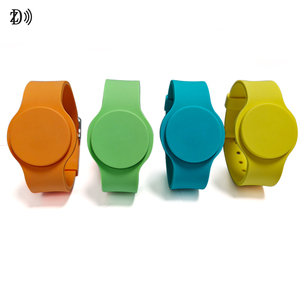
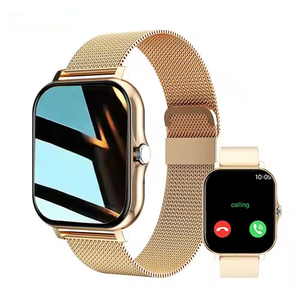
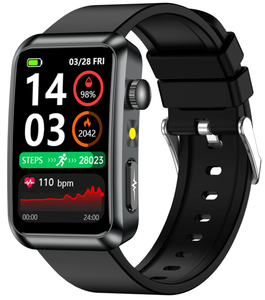
The global demand for low-power, bistable Electrophoretic Displays (EPD) has surged dramatically beyond traditional e-Readers into smart wearables, secondary mobile screens, digital luggage tags, medical diagnostic monitors, and retail Electronic Shelf Labels (ESL). Sourcing the right E-Ink display manufacturer requires evaluating micro-encapsulated ink formulation, active-matrix TFT backplane production, glass vs. flexible substrate engineering, optical bonding capabilities, and supply chain stability.
Below is an authoritative operational analysis of the world's leading E-Ink screen manufacturers, custom display module assemblers, and specialized OEM engineering partners.
Overview & Key Strengths: E Ink Holdings controls the foundational patents for microencapsulated and microcup electrophoretic technology. They supply raw film (Carta, Kaleido 3, Spectra 6, Prism) and TFT backplanes. EIH operates world-class cleanroom facilities and sets the global benchmark for contrast ratio and reflectance efficiency.
Overview & Key Strengths: Founded in 2011, Oaxis pioneered consumer secondary E-Ink displays with the award-winning InkCase smartphone series and hybrid E-Paper wearables. Oaxis excels in full-turnkey ODM engineering—bridging ultra-low-power Bluetooth microcontrollers (Nordic/Ambiq), customized E-Ink driver IC firmware, optical clear adhesive (OCA) bonding, and sleek industrial designs awarded by iF Design and Computex d&i.
Overview & Key Strengths: DKE specializes in automated module packaging for segment and dot-matrix E-Paper screens. Operating extensive FOG (Film-on-Glass) and COG (Chip-on-Glass) bonding lines, DKE is a premier mass-supplier for retail ESL tags, smart meters, and industrial low-power instrumentation displays.
Overview & Key Strengths: Seekink focuses on custom EPD modules tailored for digital signage, healthcare charts, and smart office systems. They maintain strong expertise in driving waveform tuning, wide-temperature operating algorithms (-15°C to 65°C), and custom front-light guide assembly.
Overview & Key Strengths: Known primarily for monochrome LCDs and OLEDs, Winstar provides high-reliability E-Paper display modules for medical equipment and automotive controls. They offer robust small-batch customization and extended product lifecycle guarantees.
Overview & Key Strengths: Highly favored by hardware engineers and hardware startups, Good Display manufactures small-to-medium size E-Ink screens (0.97" to 13.3") with standardized SPI interface boards, rich open-source sample code, and flexible substrate options.
Overview & Key Strengths: Pioneer in Organic TFT (OTFT) flexible glass-free E-Paper displays. Plastic Logic screens are virtually shatterproof and bendable, making them ideal for high-impact smart wristbands, military equipment, and curved smart card surfaces.
Overview & Key Strengths: Specializes in value-added display modifications, including projected capacitive touch screen (PCAP) optical integration over E-Ink displays, anti-glare glass coatings, and custom interface controllers for North American and European OEM brands.
Overview & Key Strengths: Delivers automotive-grade E-Ink display solutions and custom segment displays. Orient Display excels in rigorous environmental stress testing, high-humidity resistance, and customized driver board manufacturing.
Overview & Key Strengths: PDI designs ultra-low power E-Paper displays optimized for battery-free NFC operations and energy-harvesting IoT nodes. Their integrated internal timing controllers (tCon) simplify hardware firmware integration for engineering teams.
When selecting a display platform for next-generation smart watches, mobile accessories, or outdoor health monitors, hardware procurement managers must balance bistable power efficiency, daylight readability, visual refresh rates, and total Bill of Materials (BOM) cost. E-Ink screens utilize ambient light reflection rather than emission, yielding zero power consumption when displaying static images.
| Display Technology | Static Power Draw | Sunlight Readability | Refresh Rate | BOM Cost Factor | Ideal Application Scope |
|---|---|---|---|---|---|
| E-Ink (Electrophoretic) | 0 Watts (Bistable) | Exceptional (Paper-Like) | 300ms - 1000ms | Medium | Secondary Phone Screens, E-Readers, ESL, Smart Bands |
| Reflective Memory-LCD | Ultra-Low (~15 µW) | Very High | 30Hz - 60Hz | Medium - High | Outdoor Sports Watches, Fitness Trackers |
| OLED / AMOLED | High (Self-Emissive) | Moderate to Poor | 60Hz - 120Hz | High | Multimedia Smartwatches, Premium Phones |
| Transflective TFT-LCD | Moderate to High | Good in Direct Light | 60Hz | Low - Medium | Industrial Handhelds, Budget GPS Devices |
1. Substrate Durability (Glass vs. Flexible Plastic): Glass TFT backplanes offer lower initial tooling costs and higher pixel densities. Flexible plastic substrates (FPL/OTFT) eliminate shatter risks, crucial for wearable bands and kids' GPS watches subject to high mechanical impact.
2. Waveform Engineering & Temperature Compensation: Electrophoretic ink viscosity changes with ambient temperature. Premium suppliers provide custom driving waveforms stored in the timing controller (tCon) ROM to prevent ghosting across working temperature ranges (-15°C to 50°C).
3. Optical Clear Adhesive (OCA) Lamination: Direct bonding of protective cover glass to the EPD surface eliminates internal air gaps, reducing ambient reflections by up to 85% and enhancing contrast ratios significantly.
Sourcing strategies in the micro-display and wearable domain are rapidly evolving. Procurement directors must anticipate the following structural technical shifts to keep product lineups competitive over multi-year lifecycles:
Traditional monochrome E-Paper is rapidly giving way to high-saturation, multi-pigment color E-Paper. Kaleido 3 provides 300 PPI for black-and-white and 150 PPI for color by using RGB color filter arrays, making dynamic infographics on smart wristbands vibrant and battery-friendly.
The combination of ultra-low power E-Ink displays with 13.56MHz NFC passive energy harvesting allows smart devices to update displayed content (such as event badges, patient medical IDs, or dynamic luggage tags) purely from an external smartphone's RF field, completely eliminating internal lithium batteries.
Next-generation smart wearables combine edge AI microcontrollers with bi-stable E-Ink screens to dynamically swap display layouts based on user biometric state, location, and motion patterns, maximizing screen update efficiency and extending battery life to weeks instead of days.
Building on Oaxis’s pioneering dual-screen smartphone case technology, mobile devices and enterprise handheld terminals are increasingly adopting secondary back-panel E-Ink displays for ambient notifications, always-on QR boarding passes, and e-reading without draining the main OLED display.
As a global pioneer in low-power consumer electronics and secondary display solutions since 2011, Oaxis offers institutional buyers an integrated, compliance-first manufacturing partnership. We bridge creative industrial design with high-yield electronics manufacturing.
Winner of 4 international design accolades (including iF Design Awards and Computex d&i Awards). We transform complex engineering prototypes into retail-ready, sleek consumer products that stand out on global shelves.
Our dedicated software engineering teams maintain localized iOS & Android companion apps, custom Bluetooth stack implementations, and over-the-air (OTA) firmware upgrade infrastructures for long-term SKU stability.
Every production batch undergoes full electrical testing, optical alignment verification, IP67/IP68 water chamber testing, and drop tests. Our outgoing AQL inspection consistently delivers an industry-leading 99.2% first-pass yield rate.
We provide full support for international regulatory approvals—including CE, FCC, RoHS, REACH, Bluetooth SIG, and region-specific qualifications such as TELEC (Japan), UKCA (UK), and KC (Korea).
Feasibility review, display sizing, sensor mapping, target BOM cost definition within 3-5 days.
3D print enclosures, PCBA layout, optical bonding proofing, and golden sample approval in 10-15 days.
Automated SMT placement, aging tests, water-resistance validation, and packaging in 25-35 days.
Customs compliance clearance, continuous app updates, spare parts support, and 12-month limited warranty.
Whether you are scaling a specialized E-Ink product line, integrating ultra-low power displays into medical hardware, or launching branded kids/senior smartwatches, our engineering team is ready to assist.