
Standard-setting enterprise hardware platforms available for turnkey OEM private-label branding, customized firmware deployment, and full ODM architectural development.
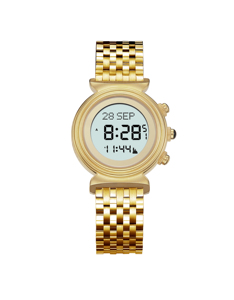
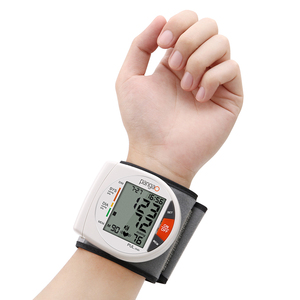
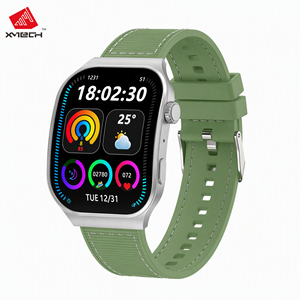

An exhaustive analysis of optical PPG sensor architecture, signal-to-noise optimization, clinical-grade calibration, and modern OEM/ODM integration standards.
In the rapidly expanding ecosystem of remote patient telemetry, continuous wellness monitoring, and biometric performance tracking, blood oxygen saturation (SpO2) monitoring has transitioned from a specialized clinical diagnostic metric into a foundational feature of consumer smart wearables. As an established OEM/ODM Oxygen Tracker Factory and Exporter, Oaxis combines over a decade of award-winning hardware engineering with advanced optical sensing research to deliver high-precision, low-power pulse oximetry platforms.
Non-invasive peripheral oxygen saturation measurement relies fundamentally on Photoplethysmography (PPG) and differential light absorption principles derived from the Beer-Lambert Law. Oxygenated hemoglobin ($\text{HbO}_2$) and deoxygenated hemoglobin ($\text{Hb}$) exhibit markedly different light absorption spectra across the visible red and near-infrared wavelengths. Standard wearable pulse oximetry units utilize high-efficiency surface-mount LEDs emitting at 660 nm (Red) and 940 nm (Infrared), paired with ultra-sensitive silicon photodiodes and multi-channel Analog Front-Ends (AFE).
Achieving high correlation with arterial blood gas (ABG) samples requires meticulous optical isolation and optoelectronic hardware layout:
However, measuring SpO2 at the wrist or finger during real-world activities introduces severe challenges, primarily motion artifacts (MA) and variations in peripheral skin perfusion (Perfusion Index, PI). When a user moves, muscle contraction and skin-sensor displacement create systemic optical noise that can easily overwhelm micro-vascular pulsatile signals.
To overcome this, our engineering framework integrates multi-axis MEMS accelerometer inputs with Adaptive Kalman Filtering (AKF) and Fast Fourier Transform (FFT) spectral decomposition algorithms. By continuously modeling motion vector noise and isolating pure AC/DC optical ratios ($\text{R} = (\text{AC}_{660}/\text{DC}_{660}) / (\text{AC}_{940}/\text{DC}_{940})$), our algorithm stack reliably delivers accurate blood oxygen readings even under low-perfusion conditions ($\text{PI} < 0.2\%$) and active physical exertion.
Key market shifts driving global B2B procurement strategies, regulatory landscapes, and hardware-software architectural specifications for wearable health monitors.
Global buyers are abandoning basic "wellness-only" trackers in favor of hardware engineered for ISO 80601-2-61 compliance and CE MDR Class IIa / FDA 510(k) readiness.
Distributors now demand factories capable of delivering validated clinical trial reports, controlled clinical hypoxia chamber validation data, and rigorous manufacturing traceability (ISO 13485 quality systems).
Single spot-check oxygen monitors are rapidly being replaced by continuous overnight SpO2 logging solutions designed to detect Obstructive Sleep Apnea (OSA) and nocturnal hypoxemia.
Modern OEM contracts require high-frequency sampling capabilities, micro-vibration alerts upon detecting oxygen drops below user thresholds, and automated Oxygen Desaturation Index (ODI) score computation inside companion apps.
B2B buyers—including remote patient monitoring (RPM) providers and insurance networks—require white-label devices featuring customizable Bluetooth SIG profiles and open mobile SDKs.
Firmware must support encrypted AES-128 telemetry transmission directly to HIPAA/GDPR-compliant cloud dashboards, bypassing walled-garden consumer software ecosystems.
Traditional optical SpO2 sensing consumes significant battery power due to the high peak currents required for 660nm and 940nm LED pulsing. The industry standard is shifting toward 55nm low-power SoC microcontrollers integrated with high-efficiency Bluetooth Low Energy (BLE 5.3).
By deploying adaptive duty-cycling algorithms—where LED sampling rate dynamically adjusts based on user activity states (sleep, rest, intense workout)—modern OEM trackers achieve 7 to 14 days of continuous battery life on a compact 180mAh Li-Po cell.
Modern wearability requirements demand zero skin irritation during multi-day usage. Leading manufacturing lines utilize medical-grade liquid silicone rubber (LSR), hypoallergenic 316L stainless steel bezels, and vacuum PVD coating.
Furthermore, oxygen trackers are no longer standalone sensors. Modern ODM architecture seamlessly combines optical SpO2 with Bioelectrical Impedance Analysis (BIA) for body composition, ECG heart-rhythm monitoring, NTC body temperature sensing, and PPG-based continuous blood pressure trend estimation.
Founded in Singapore in 2011, Oaxis has established itself as a premier OEM/ODM manufacturing hub for advanced smart wearables, kids technology, continuous health trackers, and patented secondary E Ink display systems. Over more than a decade of operational excellence, we have shipped over 1,000,000 connected units to distributors across 30+ international markets.
Our design leadership is validated by four prestigious international industrial design honors, including the Computex d&i Award and multiple iF Design Awards (2014, 2015, 2016). Unlike pure contract assemblers, Oaxis manages the entire product lifecycle in-house—from industrial design, optical lens modeling, and PCB layout to embedded C firmware, iOS/Android companion app maintenance, and international regulatory filings.






Detailed technical, commercial, and logistical answers to help procurement managers evaluate our OEM/ODM oxygen tracker manufacturing capabilities.
Partner with an award-winning Singapore-founded factory. Request custom hardware specs, wholesale price quotes, or engineering feasibility reviews today.