
Verified B2B export platforms engineered for global brand private-labeling, wholesale distribution, and customized ODM firmware integration.
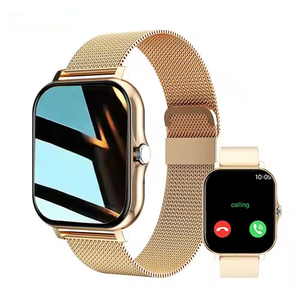
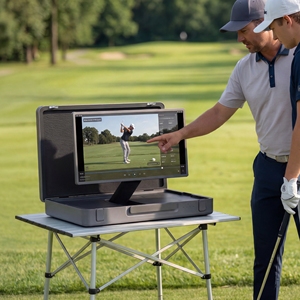
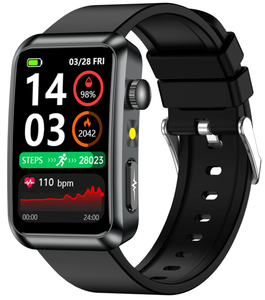
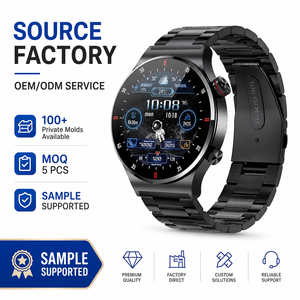
Navigating the consumer electronics supply chain requires moving beyond basic assembly. True manufacturing leadership relies on vertically integrated R&D, proprietary algorithms, and comprehensive compliance management.
Unlike mid-tier white-label vendors that depend on third-party public app platforms, tier-1 Chinese factories maintain internal iOS/Android software teams. We offer full SDK/API exposure, localized cloud server deployment, and custom UI skinning to guarantee continuous OS compatibility updates.
Backed by prestigious international honors—including the Computex d&i Award and multiple iF Design Awards—our hardware engineering fuses modern micro-electronics with ergonomic durability, ranging from ultra-light silicone bands to surgical-grade stainless steel housings.
Our production facilities support low-latency prototyping, high-speed SMT placement lines, 100% automated optical inspection (AOI), pressure-chamber IP68 water-resistance validation, and rigorous battery cycle stress testing under strict AQL 0.4 inspection standards.
Supply Chain Security Note: All products are manufactured in compliance with international export regulations including CE, FCC, RoHS, REACH, Bluetooth SIG, alongside specialized regional qualifications such as TELEC (Japan), KC (Korea), UKCA (UK), and NCC (Taiwan).
The global wearable market is shifting from generic activity counting to specialized medical telemetry, hyper-niche audience targeting, and hybrid energy architectures. Procurement teams must adjust their sourcing roadmaps accordingly.
Mass-market smart watches face intense price competition. B2B procurement channels are increasingly pivoting toward tailored target segments:
Next-generation smart watch ODM sourcing centers on medical-grade sensor integration:
| Platform Category | Core MCU Chipset | Primary Target Audience | Key Hardware Architecture | Avg. Target MOQ Range |
|---|---|---|---|---|
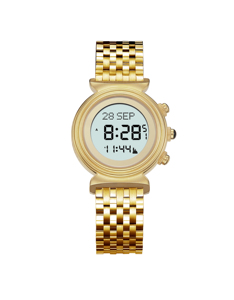
| Islamic Prayer & Cultural Smartwatch | Realtek RTL8763E / Dialog | Middle East, Southeast Asia B2C Brands | Stainless Steel Casing, Digital Qibla Compass, LCD/AMOLED | 500 – 1,000 Pcs |
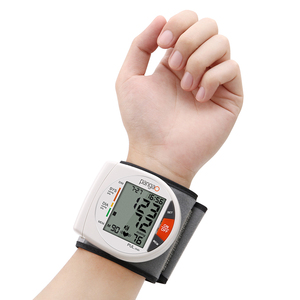
| Senior Telecare & BP Monitor | Nordic nRF52840 / MTK Mobile | Healthcare Distributors, Telehealth Ops | Micro Air-Pump Strap, Optical PPG Array, Fall Gyroscope | 300 – 500 Pcs |
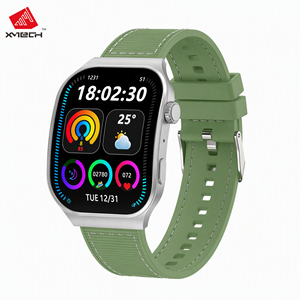
| AI Voice & Payment Smartwatch | High-Performance Dual-Core Chipset | Tech Retail Chains, Operator Bundles | Rectangular Screen, Offline Payment NFC, AI Voice Engine | 1,000+ Pcs |
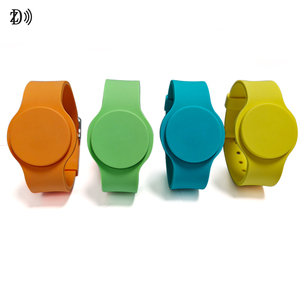
| Passive RFID/NFC Event Bands | NTAG215 / High-Frequency Chip | Concerts, Resorts, Access Control Systems | Seamless Silicone Injection, Dual 13.56MHz Coil | 2,000+ Pcs |
To maintain product differentiation on global retail shelves like Amazon, Best Buy, or regional telecom outlets, sourcing managers must understand underlying hardware innovations.
While high-brightness AMOLED panels dominate premium consumer segments, innovative designs increasingly employ zero-power static displays. Pioneers in the sector utilize E Ink dual-screen cases and reflective LCD layers that maintain visibility under direct sunlight while stretching operational battery life from days to months.
Modern wearables are moving away from heavy smartphone cloud reliance. On-device neural network accelerators allow localized offline voice command execution, instant language translation, and intelligent activity auto-detection, protecting end-user privacy while cutting Bluetooth transmission latency.
Smart watches are no longer standalone tracking bands; they serve as central control hubs for family health environments. By syncing biometrics directly with smart scales, luggage hardware trackers, and home displays, OEM ecosystems deliver complete health-and-lifestyle telemetry in a single dashboard.
When managing high-volume OEM/ODM projects in Shenzhen or Dongguan, procurement teams should follow a structured verification process to minimize hardware defects, delivery delays, and intellectual property risks.
Ensure your supplier uses verified tier-1 component vendors rather than refurbished chipsets or grade-B lithium batteries:
A reliable factory must demonstrate rigorous quality control checkpoints along the production assembly line:
Clear, detailed answers regarding minimum order quantities, private-label branding, firmware modifications, compliance, and international warranty terms.