
Explore our certified smart body composition scales, health monitors, and connected ecosystem hardware engineered for global importers, distributors, and brand owners.
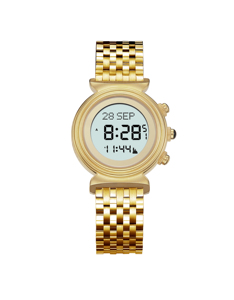
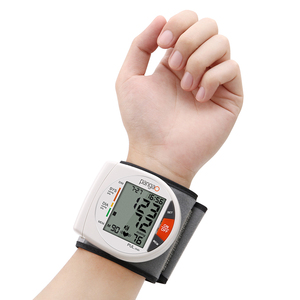
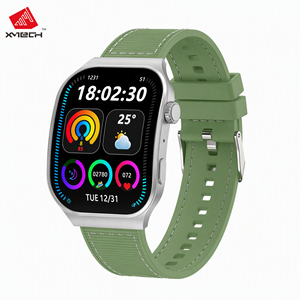
The global connected health and personal wellness ecosystem has experienced a structural paradigm shift. No longer viewed simply as domestic utility devices, modern digital bathroom scales and body composition analyzers have emerged as primary diagnostic nodes within personal health management, chronic disease prevention, and corporate wellness initiatives. As international procurement leaders, OEM brand directors, and consumer electronics distributors evaluate manufacturing partners, identifying the top China bathroom scale suppliers demands a rigorous technical audit spanning sensor physics, bioelectrical impedance analysis (BIA) algorithm design, regulatory compliance, and supply chain scalability.
Key Procurement Insight: Modern smart bathroom scale platforms must balance hardware sensor fidelity (G-type strain gauge load cells with <±50g hysteresis) with cloud-agnostic firmware architectures capable of seamlessly streaming encrypted biometrics to iOS, Android, and third-party telehealth platforms.
At the core of every reliable digital bathroom scale lies its strain gauge transducer network. High-tier Chinese OEM manufacturers have evolved beyond traditional mechanical lever balances and low-grade aluminum sensors to deploy precision G-shaped strain gauge load cells fabricated from high-yield strength manganese steel alloys. This structural architecture ensures that point-load distribution variations—caused by non-centered user foot placement—are electronically compensated via internal Wheatstone bridge circuitry.
When sourcing B2B bathroom scales, hardware procurement engineers must audit three critical sensor performance indicators:
Employs 20kHz low-frequency currents for extracellular water and 100kHz high-frequency currents to penetrate cell membranes for intracellular hydration indexing.
Replaces traditional stainless steel sensor pads with invisible Indium Tin Oxide (ITO) conductive film for a seamless, aesthetic glass surface.
Fully qualified under CE, FCC, RoHS, REACH, and Bluetooth SIG certifications with regional FDA 510(k) and TELEC options.
The consumer health market has rapidly migrated from basic weight-only scales toward multi-frequency Bioelectrical Impedance Analysis (BIA) body composition platforms. BIA technology operates by injecting an imperceptible, low-level micro-current through the lower extremities and measuring the resistance (impedance) encountered as the signal traverses muscle, adipose tissues, bone density, and body fluid compartments.
Legacy body fat scales rely on single-frequency (50kHz) sinusoidal current measurement. While cost-effective, single-frequency systems rely heavily on empirical population-average regression equations, leading to significant measurement variance in non-standard body types (e.g., endurance athletes, elderly populations, or individuals with localized edema).
Leading Chinese exporters now champion Dual-Frequency and Multi-Frequency BIA Architectures. By simultaneously driving alternating currents at low frequencies (5kHz - 20kHz) and high frequencies (100kHz - 250kHz), these advanced platforms differentiate between intracellular water (ICW) and extracellular water (ECW). This granular impedance spectroscopy enables precise calculation of up to 16 key health metrics, including:
| Body Composition Metric | Measurement Principle | Clinical / Consumer Significance |
|---|---|---|
| Visceral Fat Index | Abdominal cross-sectional impedance modeling | Key indicator for metabolic syndrome risk assessment |
| Skeletal Muscle Mass (SMM) | High-frequency intracellular bio-resistance | Essential metric for athletic training & sarcopenia tracking |
| Bone Mineral Content | Dual-energy radiologic regression algorithm | Monitors osteopenia risk in aging demographics |
| Basal Metabolic Rate (BMR) | Fat-free mass (FFM) oxygen consumption derivation | Calculates daily caloric baseline requirements |
| Body Water Percentage (TBW) | Dual-frequency extracellular/intracellular ratio | Detects systemic dehydration and fluid retention |
To maintain market leadership, B2B procurement teams must align their product development roadmaps with upcoming technological shifts within the smart hardware supply chain. China's leading manufacturing ecosystems are driving four primary innovations:
Traditional body fat scales utilize elevated 304-stainless steel metal electrode pads glued to the glass surface. Modern aesthetic standards have made Full-Surface ITO Conductive Glass the preferred specification. Deposited via magnetron sputtering, ITO films deliver optical transparency (>85%) alongside high electrical conductivity (<10 Ω/sq). This allows end users to place their feet anywhere on the scale platform without sacrificing measurement precision.
Bluetooth-only scales suffer from user friction, requiring the companion smartphone app to be actively open during weighing. Future-proof procurement requires hybrid connectivity. Dual-mode module implementations allow the scale to sync instantly via Bluetooth Low Energy (BLE 5.3) for initial setup, while auto-routing background measurements directly to the cloud via 2.4GHz Wi-Fi or Matter-enabled smart home hubs. This eliminates manual syncing and enables multi-user household profiling seamlessly.
Advanced scale platforms now incorporate low-power ARM Cortex-M4 microcontrollers running lightweight edge-AI micro-models. These onboard algorithms detect user identity automatically based on historical weight and impedance fingerprints. Furthermore, firmware algorithms analyze weight velocity changes over rolling 30-day windows to detect early indicators of cardiovascular fluid retention, weight rebound trends, or muscle atrophy.
Selecting a long-term OEM/ODM scale partner in China requires a deep examination of their quality management system (QMS), automated assembly lines, and firmware development capabilities. Buyers must look beyond marketing claims and verify the following operational standards:
Insist on factories utilizing robotic weight-loading systems that test 50kg, 100kg, and 150kg reference weights across 5 platform zones to eliminate human calibration error.
Ensure outgoing inspection protocols enforce strict Acceptance Quality Limit (AQL) standards for cosmetic surface defects, strain gauge soldering, and wireless signal strength.
Verify that your factory provides fully documented iOS (Swift) and Android (Kotlin) SDKs with native Apple HealthKit, Google Fit, and Fitbit platform integration.
Leading factories utilize Class 10,000 dust-free rooms for glass cleaning, ITO sputtering, and LCD/LED display bonding to prevent internal condensation and debris.
Leveraging over a decade of award-winning industrial design and medical-grade manufacturing expertise to power global consumer tech brands.
Founded in 2011, our engineering team brings a rich legacy of award-winning product design (including 4 international iF Design & Computex d&i awards), merging cutting-edge electronics with intuitive user experiences.
Unlike standard assembly plants that outsource software, we maintain dedicated mobile app and embedded firmware teams. We provide regular OS compatibility patches, cloud server setup, and custom UI skinning for OEM partners.
Our production facilities operate under ISO 9001 and ISO 13485 quality systems. All products leave the factory with full CE, FCC, RoHS, REACH, and Bluetooth SIG certifications, alongside customized region-specific approvals (TELEC, UKCA, KC, NCC).
Detailed answers to key operational, technical, and logistical questions asked by international buyers and OEM clients.
For standard private-label branding (custom logo printing, customized packaging, and localized user manuals on existing production platforms), our standard MOQ starts at 1,000 units. For full ODM projects requiring custom industrial glass tooling, unique plastic injection molds, or bespoke PCB layout designs, the base MOQ is typically 3,000 to 5,000 units depending on component specifications.
Every scale undergoes a rigorous 3-stage automated calibration process using robotic mass-placement systems. Load cells are subjected to thermal aging tests (-20°C to +65°C) and 10,000-cycle fatigue stress testing. Furthermore, our internal firmware utilizes anti-interfering digital filtering algorithms to reject ambient vibrations and ensure reliable ±50g resolution.
Yes. We provide comprehensive, fully documented Software Development Kits (SDKs) for both iOS (Objective-C/Swift) and Android (Java/Kotlin), alongside Bluetooth protocol documentation. Our engineering team assists your developers in configuring BLE payload parsing, data decryption, and real-time syncing to your proprietary cloud backends.
Our bathroom scale series complies with all major global import standards. Standard shipments carry CE (EMC/LVD), FCC Part 15B, RoHS 2.0, and REACH documentation. For smart Bluetooth and Wi-Fi models, we provide Bluetooth SIG qualification and RED/FCC radio certifications. Additional regional approvals such as TELEC (Japan), KC (Korea), NCC (Taiwan), and UKCA (UK) are available upon project setup.
Pre-production golden samples with custom branding require 7 to 12 working days. Upon sample approval and deposit confirmation, mass production lead times typically range from 25 to 35 days for repeat orders. Initial OEM orders requiring new packaging dielines and artwork verification may require 35 to 42 days.
All products are backed by a 12-month standard limited manufacturer warranty. For high-volume B2B orders, we provide 1% to 2% spare FOC (Free of Charge) units or key replacement components (such as display modules, sensor feet, and glass tops) alongside every container shipment to streamline localized RMA resolution for your distribution network.