
Precision-engineered pulse watches, biometric activity bands, and digital health displays manufactured to rigorous CE, RoHS, and FCC standards.
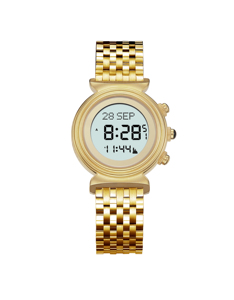
Rugged electronic LCD smartwatch engineered with integrated PPG heart rate telemetry, Islamic prayer time calculation algorithms, and IP68 water resistance.
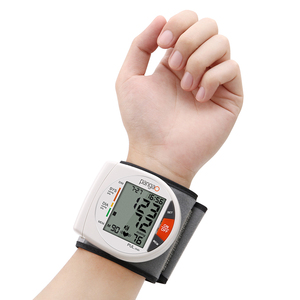
Automated wrist-worn blood pressure and pulse monitor featuring oscillometric sensor arrays, custom inflation pumps, and clinical accuracy validation.
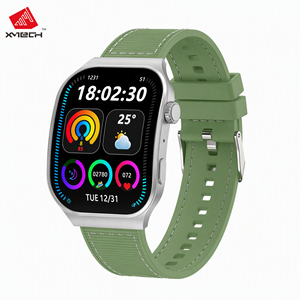
Rectangular silicone Android smartwatch featuring continuous pulse rate tracking, AI voice assistant, multi-spectral SpO2 monitoring, and contactless payments.
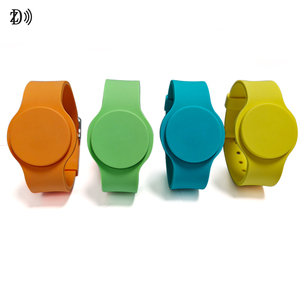
Flexible NTAG215 silicone pulse and event tracking bracelet designed for sports telemetry, access control, and real-time athletic biometric identification.
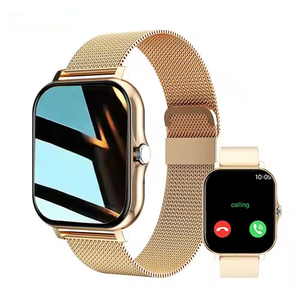
Sleek multi-sport watch equipped with real-time pulse monitoring, blood pressure estimation algorithms, Bluetooth 5.2 connectivity, and long battery life.

Portable suitcase touchscreen smart tablet engineered for institutional tele-health monitoring, fitness coaching telemetry, and pulse watch sync management.
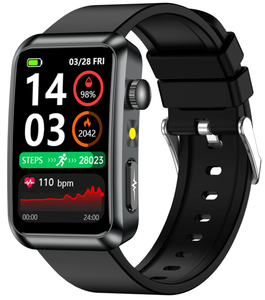
High-reliability wearable featuring continuous optical pulse monitoring, nocturnal oxygen saturation tracking, fall detection alert system, and 7-day battery runtime.
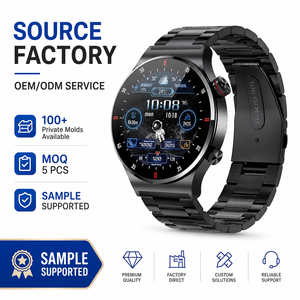
Premium alloy casing smart watch integrating high-precision optical heart rate sensors, dynamic pulse waveform analysis, sleep staging, and BT calling.
In the rapidly expanding global market for connected health devices and personal fitness monitors, procuring compliant, medically accurate, and consumer-ready CE certified pulse watches requires rigorous technical evaluation. Importers, brand owners, and healthcare technology distributors face complex regulatory landscapes across the European Union, North America, and the Asia-Pacific region. Selecting a certified manufacturing partner is no longer strictly an exercise in unit-cost negotiation; it demands a deep audit of the factory's optical sensor calibration processes, firmware signal-to-noise ratio (SNR) optimization, electromagnetic compatibility (EMC) testing, and long-term application programming interface (API) support.
As a leading hardware design house and contract manufacturer established in Singapore in 2011, our operational framework bridges the gap between award-winning consumer electronics design and stringent biomedical device standards. Having developed groundbreaking hardware platforms—including internationally recognized E-Ink smartphone interfaces, hybrid analog timepieces, and multi-spectral fitness bands—our engineering teams operate with a compliance-first methodology. This technical whitepaper analyzes the essential criteria for evaluating CE certified pulse watch exporters, examining photoplethysmography (PPG) hardware architectures, regulatory verification pathways, and future procurement paradigms for B2B decision-makers.
Utilizes dual green (525nm) and red/infrared (660nm/940nm) LED emitter arrays paired with high-gain photodiode transimpedance amplifiers to capture high-fidelity arterial pulse waveforms.
Full CE Marking compliance spanning Radio Equipment Directive (RED 2014/53/EU), Electromagnetic Compatibility (EMC 2014/30/EU), and Low Voltage Directive (LVD 2014/35/EU).
Integrated 6-axis inertial measurement units (IMU) feed acceleration vectors into Kalman signal-processing algorithms to eliminate motion noise during athletic monitoring.
Distributing pulse watches globally requires guaranteed reliability across thousands of units. Minor deviations in optical diode placement or component tolerances can induce signal drift, skewing heart rate variability (HRV) and blood oxygen saturation (SpO2) readings. Original Equipment Manufacturers (OEMs) and Original Design Manufacturers (ODMs) must maintain tightly controlled assembly lines backed by automated optical inspection (AOI) and electro-acoustic test fixtures.
Our engineering organization holds a distinguished heritage in consumer-centric technology development, recognized by global design authorities with accolades including the Computex d&i Award, iF Design Award 2016, iF Design Award 2015, and the iF Concept Design Award 2014. Unlike white-label assemblers who rely on third-party reference boards, our in-house firmware development, PCB layout engineering, and mechanical tooling teams build platforms from the ground up. This guarantees complete control over the hardware abstraction layer (HAL) and firmware stack, enabling custom algorithm tuning for specialized applications such as senior care fall alerts, athletic pulse tracking, or lifestyle wellness monitoring.
Every pulse watch manufactured within our facilities undergoes exhaustive quality assurance before packaging. Our quality metrics demonstrate a consistent 98% outgoing QC pass rate across high-volume production runs. Key manufacturing control points include:
Navigating global customs requires verifiable compliance certificates issued by accredited Notified Bodies. Below is an overview of the certification standard matrix supported across our product lines:
| Certification Mark | Regulatory Scope | Applied Standard / Directive | Target Region |
|---|---|---|---|
| CE (RED & EMC) | Radio frequency, safety, & electromagnetic compatibility | EN 300 328, EN 301 489, EN 62368-1 | European Union / EFTA |
| RoHS 2.0 & REACH | Hazardous substance restriction & chemical safety | Directive 2011/65/EU & Regulation EC 1907/2006 | Global / Europe |
| FCC Part 15C | Intentional radiator RF emissions compliance | FCC CFR Title 47 Part 15 Subpart C | United States |
| Bluetooth SIG | Wireless protocol interoperability & QDID registration | Core Specification 5.0 / 5.2 / 5.4 | Worldwide |
| TELEC / KC / NCC | Regional radio law & telecom approval | MIC Japan, RRA Korea, NCC Taiwan testing protocols | Asia-Pacific Regional Markets |
| UN38.3 & IEC 62133 | Lithium Polymer battery transport & cell safety | UN Manual of Tests and Criteria / IEC 62133-2 | International Air/Sea Freight |
The global pulse watch industry is undergoing a structural paradigm shift driven by advancing sensor integration, miniaturized micro-electronics, and artificial intelligence at the edge (Edge AI). Procurement directors and brand strategists must anticipate these industry vectors to avoid sourcing legacy technology that faces rapid market obsolescence.
Traditional cuff inflation models are being supplemented by photoplethysmography pulse wave velocity (PWV) analysis. Next-gen pulse watches compute Pulse Transit Time (PTT)—the time delay between heart ventricular contraction and arterial pulse arrival at the wrist—to provide continuous, non-invasive blood pressure trend monitoring without mechanical pumps.
Single-green LED PPG modules are rapidly giving way to quad-LED, multi-wavelength sensor engines. By combining 525nm (green) for heart rate, 660nm (deep red) and 940nm (infrared) for oxygen saturation, and 850nm (near-infrared) for tissue hydration, factories can output clinical-grade multi-metric telemetry from a compact wrist component.
Rather than streaming raw PPG telemetry over Bluetooth to a mobile app for cloud computing, modern low-power microcontrollers (such as Nordic Semiconductor nRF53 series or Dialog DA14695) execute lightweight neural network models directly on the watch silicon. This enables real-time detection of Atrial Fibrillation (AFib) and arrhythmia with millisecond latency while dramatically reducing power consumption.
The European Green Deal and evolving REACH chemical restrictions are accelerating the phase-out of traditional halogenated plastics and nickel-plated alloys. Leading exporters are transitioning to medical-grade bio-based TPU straps, 316L hypoallergenic stainless steel casings, and recyclable retail packaging designed for zero-waste compliance.
Historically, B2B buyers relied on fragmented supply chains—purchasing watch housings from one vendor, motherboard hardware from another, and licensing third-party mobile applications. This structure created severe maintenance overhead, software bugs following iOS/Android updates, and split liability during regulatory audits.
Today, tier-one distributors prioritize vertically integrated ODM partners capable of maintaining full-stack software and hardware alignment. Having an in-house app development team dedicated to maintaining iOS and Android ecosystem compatibility ensures that companion health apps receive uninterrupted quarterly OS updates, security patches, and localized UI translations, safeguarding the end-user experience across global markets.
When reviewing technical spec sheets from prospective pulse watch exporters, enterprise buyers must evaluate five key architectural hardware blocks:
The core of any pulse watch is its optical sensor assembly. High-performance modules utilize an integrated Analog Front End (AFE) paired with optical filters that attenuate ambient light interference (fluorescent lighting, sunlight). Look for AFEs providing 16-bit to 24-bit analog-to-digital conversion (ADC) resolution to capture subtle micro-vascular volume fluctuations.
Energy efficiency dictates battery longevity. Leading pulse watches utilize ARM Cortex-M4 or M33 32-bit RISC cores operating at micro-ampere levels per megahertz. Integrated Power Management Integrated Circuits (PMIC) dynamically regulate power to the optical LEDs, activating pulsed measurement duty cycles (e.g., 10 seconds every 5 minutes) to achieve 5 to 10 days of continuous operation on a modest 180mAh to 300mAh lithium-polymer cell.
Display selection directly impacts power budgets and user ergonomics. Sunlight-readable transflective LCDs and low-power E-Ink displays excel in outdoor sports applications and continuous timekeeping with minimal power drain. High-resolution AMOLED panels deliver vibrant color depth for dynamic user interfaces, requiring adaptive brightness sensors to optimize battery depletion rate.
Raw optical signals are highly susceptible to movement artifacts caused by muscular flexion or wrist movement during exercise. Advanced pulse watch factories embed sensor fusion algorithms that correlate 3-axis or 6-axis accelerometer motion vectors against raw optical photodiode signals. The algorithm subtracts the motion noise frequency component from the optical waveform, preserving the true cardiac harmonic frequency.
Below are authoritative answers to primary technical, regulatory, and commercial inquiries encountered by purchasing teams during factory auditing and procurement negotiation.
CE RED (Radio Equipment Directive 2014/53/EU) applies to consumer smartwatches with wireless capabilities (Bluetooth, Wi-Fi), covering radio spectrum efficiency, health safety, and EMC. CE MDR (Medical Device Regulation EU 2017/745) is required if the device makes explicit medical diagnostic claims (such as diagnosing hypertension or arrhythmia). Most sports and wellness pulse watches are certified under CE RED, while clinical-grade monitors require CE MDR Class IIa/IIb notified body approval.
Yes. Enterprise ODM partners provide software development kits (SDKs) and API documentation for iOS and Android platforms. This allows business buyers to integrate raw pulse telemetry, step data, and sleep metrics directly into their proprietary tele-health portals, corporate wellness software, or custom mobile applications.
Pulse watches undergo automated pneumatic vacuum and hydrostatic pressure chamber testing according to ISO 22810 / IP68 standards. 100% of production units are tested in dry pressure chambers prior to final cartoning, with sample batches subjected to deep water immersion testing to guarantee seam integrity and gasket seals.
Standard repeat order lead times for existing platform SKUs range between 25 to 35 calendar days. Custom OEM projects featuring bespoke colorways, silkscreen logo printing, customized packaging proofing, and specialized firmware boot-up screens typically require 35 to 45 days including golden sample sign-off.
In-house software engineering teams continuously maintain base application codebases. When Apple or Google releases major operating system updates (e.g., iOS 18 or Android 15), compatible app builds are pushed to the App Store and Google Play, ensuring uninterrupted connectivity for end users without requiring client intervention.
All integrated lithium-polymer batteries carry UN38.3 transport safety test reports, Material Safety Data Sheets (MSDS), and IEC 62133 cell safety approval. This enables seamless international air and ocean freight clearance without customs holds.
Before issuing a Purchase Order (PO) or executing a contract manufacturing agreement, procurement teams should complete the following vendor qualification checklist:
Ready to launch your next-generation biometric wearable platform? Leverage our award-winning industrial design team, certified production lines, and complete OEM/ODM support to bring compliant, high-margin products to your market.