
🏆 iF Design & Computex award-winning engineering•Retail & OEM partners in 30+ markets
0%

A brand’s smartphone case now does more than protect glass and aluminum. It can become a quiet, reusable communication surface. An E Ink smartphone case offers that possibility through a low-power display that remains visible in daylight without constant backlighting. A customer might show a seasonal illustration, loyalty message, event pass, or personal photograph on the case. The image feels printed, yet it can change when needed.

This format deserves careful evaluation, not exaggerated promises. E Ink displays usually consume power mainly during image changes, which may support longer use between updates. They also provide a paper-like appearance and strong outdoor readability. However, most models refresh slowly and may use limited colors. That matters for brands expecting vivid animations or instant video. Product teams should test viewing angles, case thickness, phone compatibility, wireless charging, and protection around the camera and corners. Small details matter.

From a brand perspective, the case can support personalization, retail campaigns, membership programs, or collectible designs. It may also reduce repeated printing for short-lived visual messages. Still, the environmental value depends on material choices, product lifespan, shipping, battery design, and recycling access. The technology is promising, but not automatically sustainable.

A reliable launch should include real user trials. Test it in sunlight, inside stores, and during daily commuting. Ask whether customers understand the controls. Measure update time and durability. Listen closely.

The strongest case is not the most fashionable one. It is the one that solves a clear customer problem while respecting technical limits.
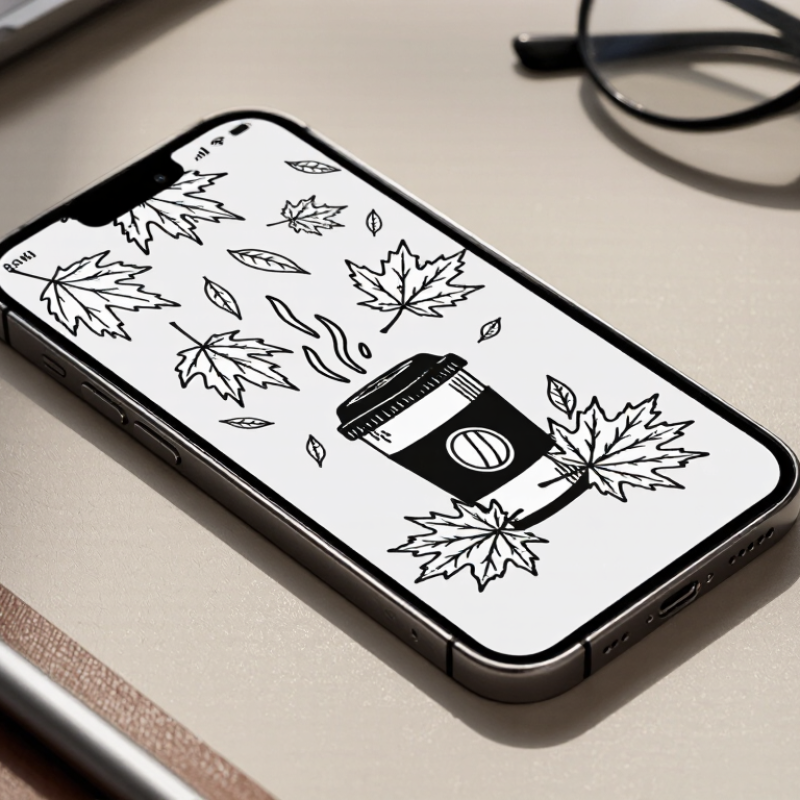
Why Choose an E Ink Smartphone Case for Your Brand?

What Is an E Ink Smartphone Case?

An E Ink smartphone case is a protective phone cover with a low-power electronic paper display. Unlike a standard screen, it uses charged pigment particles to form images. The image remains visible without continuous power. It looks closer to printed paper than bright glass.

In practical use, the case can show schedules, QR codes, artwork, reminders, or changing campaign visuals. Its display remains readable under direct sunlight. That matters during outdoor events and busy retail demonstrations. The case connects with a smartphone through a companion system, usually updating selected content wirelessly. Refreshes take longer than ordinary screens. That limitation is real. E Ink is not designed for smooth video or rapid gaming.

From a product development perspective, the case combines physical protection with a quiet communication surface. A brand can create useful visual experiences without lighting the phone screen constantly. Battery demand is generally lower, although wireless updates still consume energy. Display size, viewing angle, contrast, and color range should be checked before production. Some prototypes may also feel thicker than familiar cases. That can affect comfort in one hand. Reliable evaluation should include drop resistance, repeated updates, sunlight visibility, and daily handling. We have found that practical testing often reveals small issues that specifications miss. A beautiful concept may still need simpler artwork.

Why Choose an E Ink Smartphone Case?

An E Ink smartphone case can preserve a static image without continuously refreshing the display. The chart below presents a normalized technical comparison: 0 indicates no sustaining refresh energy for a static image, while 100 represents continuous pixel-driving as a reference baseline.

E Ink is well suited to cases that display schedules, identification information, tickets, artwork, or notifications because its paper-like screen remains visible with very low ongoing energy demand. The display requires energy mainly when the image changes.

How E Ink Technology Works in Smartphone Cases

An E Ink smartphone case uses the same basic principle as an e-paper reader. Its display contains millions of tiny capsules filled with black and white charged particles. An electrical signal moves selected particles to the front surface. Light reflects from the surface, creating text, patterns, or simple images.

The case only uses noticeable power during an image change. Afterward, the display remains visible without continuous electricity. This makes it suitable for product logos, seasonal artwork, contact details, or campaign messages. A small controller receives an image from a mobile app, then sends precise pulses to refresh the screen. In hands-on use, the display feels calm and paper-like, even under bright indoor light.

However, refresh speeds remain slower than regular phone screens. Fast animation is not its strength. This limitation deserves honest consideration.

Tips: Choose high-contrast artwork with clean shapes. Test the case under sunlight, office lighting, and evening conditions. Keep updates simple, because frequent refreshes may reduce battery life.

E Ink is also not perfectly color-rich, and early designs can look less vibrant than expected. That imperfection can become part of the product’s character. A durable case should also protect the display from bending, pressure, and sharp impacts.

Key Benefits of E Ink Cases for Brand Customization

Why choose an E Ink smartphone case for your brand?

The stronger question is how the case supports brand customization. E Ink technology can display logos, campaign messages, QR codes, or changing artwork with very low power use. The image remains visible without constant screen refresh. That suits retail counters, conferences, and customer loyalty programs.

MarketsandMarkets estimates that the global e-paper display market may grow from about USD 1.3 billion in 2023 to USD 2.1 billion by 2028.

This growth reflects wider interest in low-power digital surfaces. A customized case can turn a phone into a small, physical media space. However, expectations need control. E Ink refreshes more slowly than OLED, and color choices may appear softer. It is not a billboard. It is a quiet, tactile reminder in the user’s hand. That difference matters.

Tips:

Design for distance. Use one strong symbol, high contrast, and short wording. Test the artwork under office lights and outdoor shade. Keep QR codes large enough to scan. Reports from Nielsen show that consistent brand presentation can improve revenue, but consistency does not mean repetition everywhere. A case should feel useful, not forced. Consider seasonal artwork, event access details, or a loyalty message. Also measure real use. Some users may prefer a static design and ignore frequent updates. That is a weakness worth admitting. Collect feedback, check scan rates, and revise the content after each campaign.

Design, Manufacturing, and Branding Considerations

An E Ink smartphone case can turn a protective accessory into a small, moving brand surface. Its low-power display supports changing artwork, product information, or customer messages without constant screen illumination. However, design should begin with daily use, not visual novelty. Test grip, weight, button access, camera clearance, and readability under direct sunlight. A beautiful concept fails if it feels fragile.

Manufacturing requires careful coordination between the display, protective shell, battery, control board, and charging port. Early prototypes should include drop tests, bending checks, heat exposure, and repeated attachment cycles. Display refresh speed, grayscale performance, and surface protection also need documented testing. Small alignment errors can make a premium case look unfinished. The first prototype may disappoint. That is valuable evidence.

Tips: Keep artwork simple and high contrast. Limit animations when battery capacity is small. Use a replaceable visual system, not one permanent campaign. Before production, approve color samples, logo placement, packaging texture, and firmware behavior together. Branding should remain recognizable without overwhelming the user’s phone. Consider accessibility, data privacy, repair options, and regional compliance during development. A reliable manufacturing partner should provide inspection records, material specifications, and realistic production timelines. Avoid promising unlimited customization before testing the content workflow.

Why Choose an E Ink Smartphone Case for Your Brand? — Design, Manufacturing, and Branding Considerations

Area Decision Dimension Factual Baseline Design and Branding Implication Recommended Validation
Product Design Reflective display behavior Electrophoretic E Ink displays reflect ambient light rather than relying on continuous backlighting. They are generally easiest to read in bright surroundings and may require front lighting in darkness. A case can provide an always-visible information surface while supporting a low-power, paper-like visual identity. Test readability outdoors, indoors, and in low-light conditions with the selected panel.
Product Design Static-image power use E-paper pixels are bistable: maintaining a static image normally requires little or no display refresh power. Energy is still consumed by the controller, wireless connection, sensors, and image changes. Useful for schedules, QR codes, artwork, credentials, or messages that remain unchanged for long periods. Measure current draw during standby, image refresh, wireless transfer, and sleep modes.
Product Design Refresh performance Refresh speed depends on panel size, waveform, temperature, controller, and image mode. Full updates commonly take longer than smartphone LCD or OLED animations and can produce temporary ghosting. The experience should emphasize intentional updates rather than fast animation or video-like interaction. Measure full-refresh time, partial-refresh time, ghosting, and performance at different temperatures.
Product Design Color capability Monochrome panels typically offer the highest contrast and simpler image processing. Color e-paper supports more visual options but usually has lower color saturation and slower refresh characteristics than OLED. A monochrome visual system can create a refined, editorial look; color designs should use a controlled palette and realistic contrast expectations. Review brand artwork on the final panel under daylight and office lighting.
Mechanical Design Case protection and thickness A display module, protective lens, electronics, battery, and enclosure add volume compared with a conventional protective phone case. Protection performance depends on structure, materials, and assembly quality. The industrial design should balance visual area, grip, impact protection, camera clearance, button access, and pocketability. Conduct drop, torsion, abrasion, button-force, camera-clearance, and wireless-charging tests on production-intent samples.
Mechanical Design Material selection Common case constructions combine flexible elastomers such as TPU with rigid plastics such as polycarbonate. Material choice affects impact absorption, stiffness, surface feel, print adhesion, and aging. A two-material construction can separate protection, grip, decoration, and display support functions. Compare hardness, drop performance, chemical resistance, UV exposure, and long-term color stability.
Electronics Connectivity architecture An E Ink case may use a wired interface, NFC, Bluetooth Low Energy, or a dedicated controller. Each option changes power consumption, pairing behavior, software requirements, and enclosure complexity. A simple update workflow can be more important to perceived product quality than adding complex connectivity features. Evaluate connection range, update time, pairing success rate, phone compatibility, and recovery after interrupted updates.
Electronics Battery and charging Battery performance depends on capacity, refresh frequency, wireless activity, temperature, and standby design. Charging may use a wired connector, wireless charging, or energy supplied through the phone interface where supported. The case should communicate realistic usage expectations and provide a clear low-battery and charging experience. Create a usage profile with daily image changes, wireless sessions, standby periods, and charging cycles.
Manufacturing Display integration The display requires controlled handling, a suitable protective layer, flat support, accurate alignment, and sealing against dust and moisture. The panel is more sensitive to bending and assembly stress than many plastic parts. Industrial design must reserve a stable display zone and avoid pressure points caused by clips, screws, adhesives, or enclosure deflection. Inspect alignment, display artifacts, pressure marks, dust contamination, and flex-related failures during pilot builds.
Manufacturing Decoration and surface finish Printed inks, coatings, laser marking, molded textures, and replaceable overlays have different effects on durability, color accuracy, and recyclability. Decoration near the display must not reduce contrast or visibility. A restrained finish can preserve the reflective display effect while still creating a recognizable visual signature. Perform rub, scratch, sweat, sunscreen, alcohol-wipe, UV, and humidity tests on finished samples.
Manufacturing Quality-control metrics Relevant inspection points include display uniformity, dead or stuck pixels, refresh artifacts, enclosure fit, button operation, wireless performance, charging behavior, and cosmetic defects. A written acceptance standard reduces inconsistent appearance across production batches. Define measurable limits for alignment, luminance uniformity, pixel defects, gap dimensions, and functional test results.
Branding Content flexibility Unlike fixed printing, a programmable display can show multiple approved designs over the product life. The number of supported images and update options depends on memory, software, connectivity, and user permissions. One physical case can support seasonal artwork, event content, personalization, utility screens, or limited-edition digital experiences. Test content templates, image conversion, update permissions, failure recovery, and offline behavior.
Branding Logo and visual hierarchy Reflective displays have limited contrast and, depending on the panel, limited grayscale or color reproduction. Fine lines and small text may lose clarity after image conversion. Use bold shapes, adequate margins, high contrast, and display-specific artwork rather than directly reusing print or OLED assets. Review artwork at the final pixel resolution and test it at normal viewing distance.
Branding User-perceived differentiation A dynamic display adds a visible digital layer to a physical accessory, but its value depends on useful content, reliable operation, comfort, and durability—not novelty alone. Position the case around a clear use case such as personalization, information access, community participation, or collectible design. Run user testing that compares usefulness, comfort, ease of updating, appearance, and willingness to continue using the case.
Sustainability Repair and end-of-life planning A case containing a display, battery, circuit board, adhesives, and mixed materials is more complex to repair and recycle than a single-material case. Design for replaceable modules, accessible fasteners where practical, material identification, and responsible battery handling. Document disassembly steps, component replacement options, material composition, and disposal instructions.
Commercial Planning Platform compatibility Smartphone dimensions, camera locations, button positions, charging alignment, operating systems, and wireless capabilities differ across device models. A modular product strategy may reduce redesign effort, while each supported phone model still requires dedicated fit and function verification. Maintain a compatibility matrix covering mechanical fit, charging, cameras, controls, software, and connectivity.
Commercial Planning Launch-readiness indicators A production-ready case should have validated mechanical fit, display reliability, battery safety, software stability, cosmetic consistency, packaging protection, and user instructions. A staged launch reduces risk: engineering samples, pilot production, controlled release, and post-launch reliability monitoring. Use a documented design-verification and production-validation checklist before release.

Note: Technical performance varies by E Ink panel type, controller, enclosure design, battery configuration, software, smartphone model, and operating conditions. Values and behaviors should be confirmed with production-intent samples.

How to Evaluate E Ink Cases for Your Brand Strategy

Choosing an E Ink smartphone case requires more than checking its novelty. IDC’s Worldwide Quarterly Mobile Phone Tracker reported about 1.24 billion smartphone shipments in 2024. That scale creates a demanding test for differentiation. Your case must communicate value within seconds, not merely display a changing image.

Evaluate the case through four practical lenses: display performance, user experience, durability, and commercial fit. Ask how quickly images refresh, how sunlight affects contrast, and whether the display remains readable at an angle. Test battery impact during repeated updates. Measure scratch resistance, drop performance, charging access, and heat exposure. GSMA’s Mobile Economy 2024 report estimated 4.7 billion unique mobile subscribers worldwide in 2023. This suggests broad reach, but also varied habits and network conditions. A case strategy should support simple content updates and clear offline behavior.

The business layer matters. Review minimum order quantities, replacement parts, software integration, and certification records. Request samples from different production batches. Small differences can become expensive at scale. Our early assumption might be wrong: a larger display does not always create stronger engagement. A quieter, lower-power design may fit daily use better. Track repeat interactions, return reasons, and content changes during a pilot. A 30-day test can reveal whether users actually update the case. Good strategy needs evidence, not attractive prototypes.

FAQS

What is an E Ink smartphone case?

It is a protective phone case with a low-power electronic paper display. Charged pigment particles create the image. The picture remains visible without constant power. It resembles printed paper more than bright glass.

What can the display show?

It can show schedules, reminders, QR codes, artwork, or changing visual messages. A calendar might appear beside a simple graphic. Content usually updates through a companion system.

Does the display work well outdoors?

Yes, it remains readable under direct sunlight. That helps during outdoor events and retail demonstrations. Viewing angles and contrast still require careful testing.

Can an E Ink case play videos or support gaming?

Not effectively. Image refreshes take longer than ordinary screens. Smooth video and rapid gaming are poor matches. Static content works better.

Does the case save phone battery?

It generally uses less display power than a bright phone screen. Wireless updates still consume energy. Repeated refreshes may reduce the advantage. We should not assume savings without measuring them.

What physical details should be tested?

Check drop resistance, scratch resistance, charging access, heat exposure, and daily handling. Test the case in one hand. Some prototypes feel noticeably thicker. Comfort may matter more than appearance.

How should a team evaluate the case before production?

Request samples from different production batches. Measure refresh speed, sunlight readability, battery impact, and viewing angles. Test repeated updates over several weeks. Specifications can miss small problems.

What should a pilot program measure?

Track content changes, repeat interactions, return reasons, and update frequency. A 30-day pilot can reveal real habits. Users may ignore changing images. That possibility deserves attention.

What commercial issues need review?

Review minimum order quantities, replacement parts, software integration, and certification records. Confirm offline behavior and simple content updates. A larger display may not create stronger engagement. Our first assumption could be wrong.

Conclusion

An E Ink smartphone case is a protective phone accessory featuring a low-power electronic paper display that can show images, patterns, messages, or other visual content on its outer surface. Unlike conventional screens, E Ink technology reflects ambient light, remains visible without constant backlighting, and uses energy mainly when the displayed content changes. This makes the case an innovative platform for combining everyday phone protection with customizable visual communication.

For brand customization, an E Ink smartphone case offers opportunities for distinctive designs, seasonal updates, interactive campaigns, and reusable promotional content while supporting a clean, modern appearance. Successful development requires careful attention to display size, image quality, durability, material selection, power management, production consistency, and personalization methods. Brands should also evaluate compatibility with different phone models, user convenience, manufacturing capacity, total cost, sustainability goals, and the case’s ability to support long-term marketing strategies. A thoughtful assessment can help ensure that the product is practical, visually appealing, and aligned with the intended audience and campaign objectives.

Evelyn

Evelyn

Evelyn is a dedicated marketing professional with a deep understanding of the company’s products, services, and target markets. With a strong background in strategic communication, customer research, and digital content development, she transforms complex product information into clear, practical,......