
🏆 iF Design & Computex award-winning engineering•Retail & OEM partners in 30+ markets
0%

Choosing among China’s top 10 Heart rate fitness tracker suppliers requires more than comparing product prices. Buyers should examine sensor performance, manufacturing consistency, software support, and long-term service. A tracker may look impressive in product photos yet provide unstable readings during cycling, interval training, or cold-weather runs.

Experienced sourcing teams usually request samples before discussing large orders. They test heart-rate accuracy against a trusted chest strap, check battery performance, and inspect how the device fits different wrists. Screen brightness matters outdoors. So does comfort.

Supplier verification should include factory capabilities, quality-control procedures, export experience, and relevant product certifications. Clear documentation can reduce misunderstandings about materials, wireless functions, packaging, and warranty responsibilities. It is also useful to review app compatibility, data security practices, and the supplier’s ability to support firmware updates. Small details often reveal operational maturity.

No supplier is perfect. That matters. A reliable partner should explain technical limits instead of promising medical-level accuracy without proper evidence. Buyers should also distinguish between wellness tracking and regulated medical devices. These categories have different expectations and compliance requirements.

This overview introduces ten notable Chinese suppliers for different purchasing needs, including private-label projects, retail programs, sports brands, and corporate wellness solutions. The comparison focuses on practical criteria rather than promotional claims. Product quality can vary between batches, and supplier rankings may change as technologies and certifications develop. Careful testing remains essential before any commercial commitment. A strong supplier delivers more than a functioning device. It provides repeatable quality, responsive communication, and realistic technical support. That is the standard worth applying.
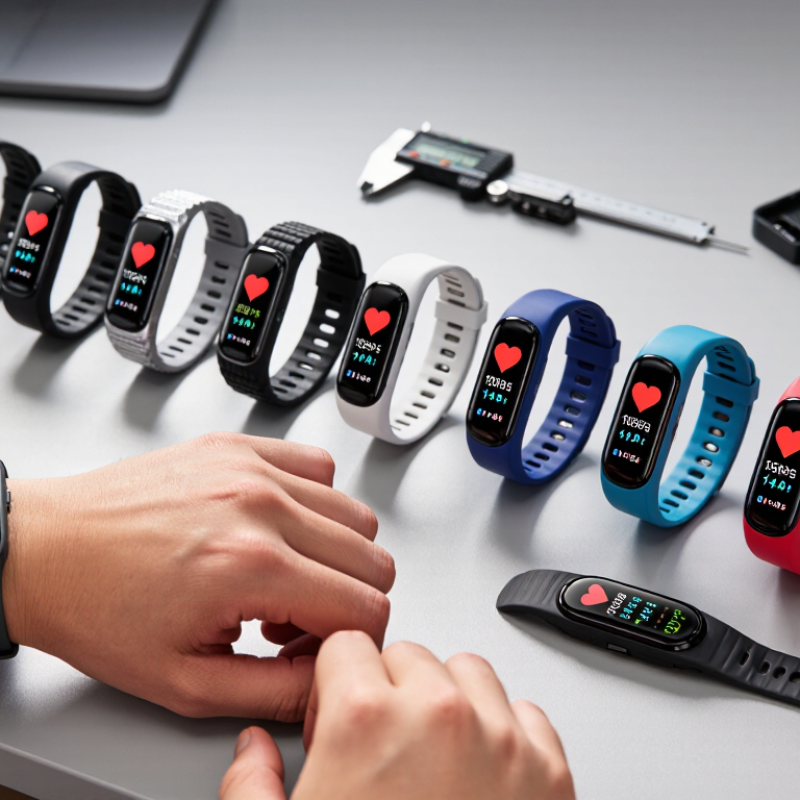
China Top 10 Heart Rate Fitness Tracker Suppliers?

China’s Top 10 Heart-Rate Fitness Tracker Suppliers by Market Reach

China’s leading heart-rate fitness tracker suppliers reach buyers through a mix of export networks, online channels, and contract manufacturing. Market reach is not just shipment volume. It also reflects how consistently a supplier can serve different regions, handle repeat orders, and provide responsive technical support. Small details matter: stable sensor readings during a brisk walk, clear setup instructions, and replacement parts that arrive on time.

A useful top-ten comparison should examine export experience, production capacity, product testing, and customization options. Ask for sample units and compare heart-rate readings across several activities, rather than relying only on a specification sheet. Check how the supplier manages firmware updates and quality checks between production batches. These steps reveal more than a polished catalog.

Quite often.

Rankings can shift as sales channels and manufacturing partnerships change. Public information may not show a supplier’s full distribution reach, so treat market position as an estimate, not a guarantee. That is an imperfect measure. Buyers should confirm current references, lead times, and support arrangements directly, especially when serving multiple markets. A broad sales footprint is useful, but dependable performance over time is what earns repeat business.

How PPG Accuracy, Sampling Rates, and Sensor Standards Shape Supplier Rankings

China Top 10 Heart Rate Fitness Tracker Suppliers?

A credible top-ten ranking should begin with measured PPG performance, not factory size or online visibility. PPG accuracy depends on LED wavelength, sensor placement, skin contact, and motion control. Green light often performs well during steady exercise. Skin tone, sweat, tattoos, and loose straps can still reduce signal quality. Sampling rate matters too. A tracker using 25 Hz may capture resting changes adequately. Faster movement may require 50 or 100 Hz sampling. Higher rates alone do not guarantee better heart rate data.

Experienced buyers should request validation reports against a clinical-grade reference device. Testing should cover walking, interval training, cycling, and recovery periods. Ask for results across different skin tones and wrist sizes. Sensor standards should also be reviewed carefully. Electrical safety, optical safety, biocompatibility, and software controls need documented evidence. Standards support reliability, but they do not replace real-world testing. A supplier may meet formal requirements and still deliver unstable readings. That is an uncomfortable possibility.

Tips: Ask for raw-data examples, sampling settings, error margins, and firmware revision records. Check whether testing used fixed laboratory conditions only. Request independent verification when possible. Do not rank suppliers by specifications alone. I would also examine quality consistency across production batches. No test is perfect. That limitation should remain visible.

Comparing Supplier Product Portfolios Across Watches, Bands, and Chest Straps

A credible top-ten supplier shortlist should compare product coverage, not only shipment volume. IDC’s Worldwide Quarterly Wearable Device Tracker reported 537.9 million wearable-device shipments in 2024. That scale shows strong demand for watches and bands, but it does not prove heart-rate accuracy. Buyers should examine sensor design, validation methods, firmware updates, and supplier production experience.

Watches usually combine optical PPG sensors with GPS, sleep tracking, and training analytics. They suit daily users who want a broad feature set on one screen. Fitness bands are lighter, simpler, and often more affordable. However, smaller housings may limit battery capacity and sensor placement. Chest straps use electrical signals near the torso and commonly respond faster during intervals, cycling, and sudden intensity changes. They are less comfortable for some users. That matters.

When comparing suppliers, request sample units and raw-data exports. Check readings during resting periods, steady running, and short sprints. Compare results with a validated reference device, not marketing claims. A 2024 report from Grand View Research describes wearable health technology as a rapidly expanding market, yet supplier quality remains uneven. Water resistance ratings, skin-contact materials, Bluetooth stability, and replacement policies deserve equal attention. No portfolio is perfect. A supplier may offer excellent watches but weak chest straps, or accurate straps with poor software. This is where careful field testing becomes more reliable than a polished catalog.

China Top 10 Heart Rate Fitness Tracker Suppliers

Product portfolio comparison across watches, fitness bands, and chest straps. The values show the number of suppliers in a 10-supplier comparison set offering each product form factor in their listed portfolio.

Watches provide the broadest portfolio coverage, followed by fitness bands and chest straps. These figures represent product-form-factor availability rather than sales volume or market share.

Evaluating ODM Capacity, Certifications, App Integration, and Export Coverage

When comparing heart rate fitness tracker suppliers in China, look beyond product photos. Ask how the ODM team handles sensor placement, strap materials, firmware changes, and pilot runs. A supplier should explain how it tests readings during walking, interval training, and recovery, while noting that wrist-based measurements can vary with fit and motion. Ask for sample reports, not just a claim of accuracy. Small details matter.

Certifications should match the product and target market. Request current documents, confirm their scope, and check whether they cover the finished device or only selected components. Also review battery safety records, traceability, and quality-control steps for production batches. A neat certificate folder is useful, but it does not replace a clear audit trail. Verify the details.

App integration deserves the same attention as hardware. Ask whether the app supports your required languages, data exports, account controls, and software updates. Clarify who maintains the app after launch and how defects are reported. Test syncing on different phones and with weak network access. It can fail there. Export coverage also needs evidence: request recent destination references, shipping terms, packaging specifications, and a realistic lead-time plan. A supplier may serve many regions, yet still struggle with one market’s labeling or support needs. Build a small pilot first, document what goes wrong, and leave room to revise the checklist.

A Buyer’s Scorecard for China’s Ten Leading Heart-Rate Tracker Suppliers

A useful scorecard for China’s leading heart-rate fitness tracker suppliers should measure more than unit price. Request sample devices and compare readings during steady walking, interval training, and recovery. Note whether results remain consistent across different wrist sizes and skin tones. Check sensor placement, strap comfort, screen readability, and battery life during continuous heart-rate monitoring. Small differences matter. A tracker that shifts during a run may produce noisy readings, even when its specifications look impressive.

Give each supplier a written assessment covering sensor performance, production capacity, quality-control records, customization limits, and response time. Ask how often devices are calibrated and how they handle failed samples or production defects. Review test reports, but verify key claims with your own sample checks. A clear report is not proof by itself. Also compare communication: do answers include measurable details, or only broad assurances? One weakness in this scorecard is that sample testing cannot fully predict months of daily wear. Trackers should be evaluated in realistic use, and findings should be recorded before purchase decisions. Keep the scoring criteria consistent across all ten suppliers; otherwise, the comparison can quietly favor the most persuasive sales team.

China Top 10 Heart Rate Fitness Tracker Suppliers? - A Buyer’s Scorecard for China’s Ten Leading Heart-Rate Tracker Suppliers

An anonymized procurement scorecard for comparing China-based heart-rate fitness tracker suppliers. Supplier identities are intentionally withheld.
Rank Anonymous Supplier Core Product Capability Heart-Rate Measurement Typical MOQ OEM / ODM Flexibility App & SDK Support Quality-System Evidence Export Readiness Commercial Score Buyer Verification Status
1 Supplier 01 Wristbands, smartwatches, chest straps Optical PPG; continuous and resting modes 500–1,000 units Excellent Mobile app, API and firmware customization ISO 9001 documentation available on request Strong documentation and multilingual packaging support 91/100 Evidence supplied
2 Supplier 02 Fitness watches and wearable bands Optical PPG; sleep and exercise tracking 1,000–2,000 units Very strong White-label app and basic SDK options Factory audit and quality certificates available Experienced with international e-commerce orders 88/100 Evidence supplied
3 Supplier 03 Chest straps and sports heart-rate monitors Electrical or optical sensing, model dependent 300–800 units Very strong Bluetooth connectivity and data export support Production inspection records available Good support for distributor and sports-channel orders 86/100 Evidence supplied
4 Supplier 04 Entry-level smart bands and watches Optical PPG; periodic measurement 1,000–3,000 units Strong Standard app; limited API customization Basic quality-control package available Suitable for standard export programs 82/100 Partially verified
5 Supplier 05 Health-monitoring watches Optical PPG; heart-rate alerts and trends 500–1,500 units Strong App branding, dashboard and firmware options Third-party test reports available for selected models Good packaging and after-sales coordination 80/100 Partially verified
6 Supplier 06 Sports watches and outdoor wearables Optical PPG; workout monitoring 1,000–2,000 units Strong Bluetooth data integration; SDK subject to project review Internal QC procedures documented Moderate export and certification support 78/100 Partially verified
7 Supplier 07 Value-oriented fitness trackers Optical PPG; single-reading and exercise modes 2,000–5,000 units Good Standard application with limited customization Factory inspection required before order approval Competitive pricing for high-volume orders 75/100 Documents requested
8 Supplier 08 Private-label bands and compact watches Optical PPG; basic daily tracking 1,000–3,000 units Good Branding support; limited integration tools Selected compliance files available Suitable for simple private-label programs 73/100 Documents requested
9 Supplier 09 Basic heart-rate wristbands Optical PPG; manual and interval readings 3,000–5,000 units Moderate Standard firmware and mobile application Quality records should be confirmed by audit Best suited to cost-sensitive projects 69/100 Documents requested
10 Supplier 10 Entry-level smart bands Optical PPG; basic heart-rate display 3,000–10,000 units Moderate Mostly standard software configuration Request current certificates and test reports Suitable for large-volume, low-complexity orders 65/100 Documents requested
Scoring dimensions include product capability, sensing configuration, minimum order quantity, customization, software integration, quality documentation and export support. All product specifications, certificates, sample accuracy and regulatory suitability should be independently verified before purchase.
Buyer note: Heart-rate tracker readings are not automatically equivalent to medical measurements. Request representative samples, validation data, applicable regulatory documents, warranty terms and a pre-shipment inspection before placing a production order.

FAQS

What should a buyer check when comparing heart-rate trackers?

Compare measured performance, quality records, production capacity, customization limits, and response time. Unit price alone is not enough.

Why do sensor placement and wrist fit matter?

Poor contact or a shifting strap can disrupt readings. Check fit across different wrist sizes during movement.

Is a higher sampling rate always better?

No. A 25 Hz rate may suit resting changes, while faster exercise may need 50 or 100 Hz. Rate alone proves little.

Which activities should sample testing include?

Test steady walking, intervals, cycling, and recovery. Record whether readings stay consistent across activities.

Can skin tone, sweat, or tattoos affect readings?

Yes. These factors may reduce signal quality. Test samples across different skin tones and real-use conditions.

What evidence should suppliers provide?

Request validation reports, raw-data examples, sampling settings, error margins, and firmware revision records.

Do formal sensor standards guarantee stable readings?

No. Standards support reliability, but real-world sample testing still matters. That gap is easy to miss.

How can buyers compare suppliers fairly?

Use the same written criteria for every supplier. Score sensor performance, comfort, battery life, and quality-control records.

Can a short sample test predict long-term performance?

Not fully. Months of daily wear may reveal problems that a brief test misses. Keep that limitation in view.

Conclusion

This article examines China’s leading suppliers of heart rate fitness tracker products, comparing their market reach, product range, and ability to serve different buyer needs. It explains how PPG sensor accuracy, sampling frequency, and measurement standards can affect performance and supplier rankings, while highlighting differences among smartwatches, fitness bands, and chest straps.

The guide also evaluates manufacturing and ODM capabilities, certifications, app integration, and export coverage. A practical scorecard brings these factors together to help buyers compare suppliers consistently, assess technical and commercial strengths, and select a partner whose products and services align with their target market and project requirements.

Clara

Clara

Clara is a professional marketing specialist with a strong understanding of customer needs, market trends, and product value. As a dedicated member of the company, she combines strategic thinking with clear, engaging communication to help readers better understand how the company’s solutions can......