
Finding the right Dual screen phone case supplier requires more than comparing prices. The case must protect two displays, support precise hinge movement, and preserve comfortable access to ports, cameras, and buttons. A weak supplier may offer attractive samples, yet fail during repeated folding, pocket friction, or accidental drops. That gap can damage customer trust quickly.
Ben Wood, Chief Analyst at CCS Insight, once observed, “Good accessories should protect innovation without getting in its way.” This principle fits dual-screen devices closely. A reliable supplier should understand hinge clearance, screen pressure, magnetic alignment, heat release, and wireless signal performance. Ask for material specifications, laboratory test records, production photos, and sample revisions. Do not accept vague claims.
Look closely.
Supplier evaluation also depends on practical experience. Test several samples with the exact phone model. Open and close the case hundreds of times. Check whether dust gathers near the hinge. Inspect edges after simulated drops. A supplier that welcomes criticism is often more dependable than one offering polished promises.
Still, no sourcing process is perfect. A factory may pass an initial inspection and later change materials. Therefore, confirm quality standards before every production run. Review packaging, labeling, replacement policies, and communication speed. Transparent suppliers explain limitations instead of hiding them. They should also provide stable lead times and documented quality controls.
The best Dual screen phone case supplier is not always the cheapest. It is the partner that protects the device, understands real user behavior, and improves when testing reveals weaknesses.
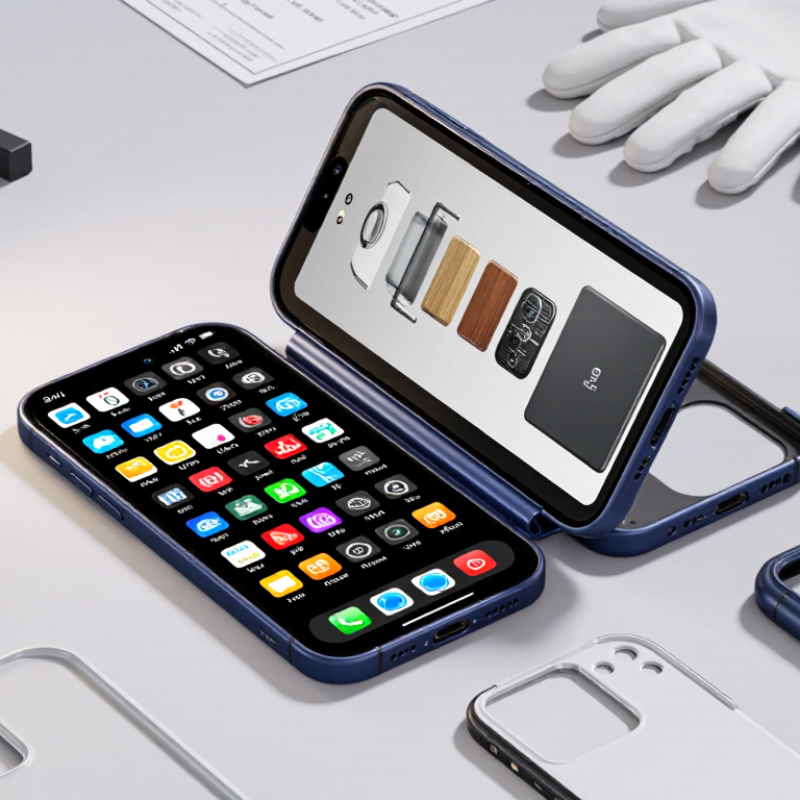
Before searching for a dual screen phone case supplier, define the product requirements in measurable terms. Record both screen dimensions, device thickness, hinge clearance, camera position, and port locations. A case that fits the main body may still restrict the second screen. Measure with a sample device, not only a technical drawing.
Think about daily use. Should the case support wireless charging, a folding stand, magnetic mounting, or easy access to buttons? Specify the preferred materials, surface texture, color tolerance, and target weight. For protection, describe realistic conditions, such as a one-meter drop onto a wooden floor or repeated hinge movement. Testing details make supplier comparisons more reliable. They also expose weak assumptions.
A useful specification should include packaging, sample quantity, production volume, and acceptable defect limits. Ask for material data, inspection records, and photos of previous testing, while checking whether the evidence matches your design. Do not request impossible precision. Small gaps may be necessary around moving parts. I once underestimated hinge friction during an early evaluation; the case looked excellent but opened awkwardly. That mistake showed why prototypes need repeated handling, not just visual approval. Leave room for revision after testing the case with screen protectors, charging cables, and gloves. A clear requirement sheet helps qualified suppliers quote accurately and explain where compromises may appear.
When selecting a dual screen phone case supplier, product compatibility should be tested before price negotiations. IDC forecast global foldable smartphone shipments at 25.2 million units in 2024, reaching 45.7 million by 2028. This growth increases the need for precise, model-specific protection.
Request samples for every target device. Check hinge clearance with the phone fully open, half-folded, and closed. The case must not press the flexible display or block the camera aperture.
Test magnet placement near wireless charging coils and antennas. Small errors matter. A two-millimeter shift can weaken charging or cause screen pressure.
Ask suppliers for material specifications, batch inspection records, and test methods. A reliable factory should show drop-test heights, hinge-cycle results, surface abrasion data, and temperature testing. IEC 60068 environmental test methods can help structure heat, humidity, and vibration checks.
I once approved a case after a basic drop test, then found its hinge adhesive loosening after repeated folding. That was my mistake. One test was never enough.
Evaluate TPU or polycarbonate hardness, edge coverage, and screen-lip height with actual samples. Request at least three production batches, not only a polished prototype.
Counterpoint Research has reported strong year-on-year growth in foldable phone shipments, but device designs still change quickly. Suppliers should therefore document tooling revisions and compatibility updates. A confident answer is useful; measurable evidence is better.
A reliable supplier should show more than attractive product photos. Ask about injection molding equipment, production capacity, material choices, and quality control procedures. For dual screen cases, precise alignment matters. The cover must protect both displays without blocking cameras, speakers, buttons, or charging ports. Request samples from different production batches. One sample can hide inconsistent fitting.
Customization should include more than color selection. Discuss logo placement, surface texture, magnetic strength, hinge structure, edge thickness, and packaging design. A capable factory can adjust mold dimensions and create prototypes before mass production. Ask for measured tolerances, drop-test records, abrasion results, and hinge-cycle data. These details reveal whether the supplier controls manufacturing or simply outsources it.
Be specific about your phone model and use conditions. A case designed for office users may fail in dusty workshops or frequent travel. Request tests with screen protectors, wireless charging, and repeated opening. Factories may promise faster delivery, but rushed tooling can create weak corners or uneven seams. This is easy to overlook. I would also review defect rates and replacement procedures in writing. No supplier is perfect, and early samples may need revision. A thoughtful supplier accepts feedback, explains limitations, and documents each change clearly.
Finding the best dual screen phone case supplier begins with checking reliability beyond a polished website. Request a company profile, production records, and recent customer references. Ask how long the supplier has produced cases for folding devices. Their answer should include measurable details, not vague promises. A sample order can reveal more than a sales presentation. Check hinge movement, magnet strength, camera clearance, and surface wear after repeated use. Small tests matter.
Certifications also require careful verification. Ask for certificates showing the issuing organization, valid dates, factory address, and covered products. A general quality certificate may not apply to every case model. Request material test reports for plastics, adhesives, coatings, and metal parts. Confirm whether the reports match your intended production batch. If the supplier avoids technical questions, treat that as a warning. I have seen attractive samples hide inconsistent stitching and weak internal frames. That mistake can become expensive after mass production.
Customer support should be tested before signing an agreement. Send several practical questions and record response times, technical accuracy, and willingness to share documents. A reliable team should explain sampling, inspection, packaging, replacement procedures, and production delays clearly. Ask who handles defects after delivery and whether communication continues after payment. Written procedures build trust, but real behavior matters more. Even strong suppliers may make occasional errors, so evaluate how openly they admit problems and correct them.
When evaluating a dual screen phone case supplier, compare landed cost, not only the quoted unit price. Request pricing at three order volumes, including tooling, sample fees, packaging, and payment charges. A $2.80 case can become $3.45 after inserts, inspection, and expedited freight. Small details matter. Ask for defect rates, replacement policies, and production capacity in writing. The best quote means little if quality failures delay your launch.
Shipping deserves equal attention. DHL’s 2024 E-Commerce Trends Report found that 81% of shoppers abandon purchases when their preferred delivery option is unavailable. Therefore, request air, sea, and rail estimates with clear delivery windows. The World Bank’s 2023 Logistics Performance Index assesses customs, infrastructure, tracking, and timeliness. Use these same areas in your supplier scorecard. Require carton dimensions, HS classification support, tracking milestones, and a backup shipping route. Do not accept “about 30 days.” Define the date range.
Long-term value appears in communication and controlled improvement. Ask whether the supplier performs pre-shipment inspections, keeps mold records, and reviews failure data quarterly. Baymard Institute’s 2024 checkout research reports an average cart abandonment rate of 70.19%, showing how easily friction damages sales. A supplier who improves packaging can protect conversion indirectly. Still, partnership promises need testing. Start with a small pilot, measure scratches, hinge alignment, and delivery accuracy, then renegotiate from evidence. Forecasts can be wrong. Mine was once too optimistic about seasonal demand. A flexible minimum order quantity would have reduced the damage.
Request samples for every target phone model. Test the case open, half-folded, and closed. Check hinge clearance carefully. A two-millimeter shift can affect charging or screen pressure.
The case should protect both screens without blocking cameras, speakers, buttons, or charging ports. Test wireless charging and screen protectors. Small errors matter.
Ask for drop-test heights, hinge-cycle results, abrasion data, and temperature testing. Request material specifications and batch inspection records. Photos alone prove little.
One polished sample can hide inconsistent fitting. Request samples from at least three batches. Compare edge thickness, seams, hinge movement, and screen-lip height.
Discuss mold dimensions, logo placement, surface texture, magnetic strength, hinge structure, edge thickness, and packaging. Request a prototype before mass production. Revisions may be necessary.
Compare landed cost, not only the unit price. Include tooling, samples, packaging, inspection, payment charges, and freight. A $2.80 case may reach $3.45 after extras.
Request air, sea, and rail estimates with specific delivery ranges. Confirm carton dimensions, tracking milestones, and a backup route. “About 30 days” is too vague.
Start with a small pilot order. Measure scratches, hinge alignment, defects, and delivery accuracy. Review replacement terms in writing. My demand forecast was once too optimistic, so flexibility matters.
Finding the right Dual screen phone case supplier starts with clearly defining your requirements, including device compatibility, materials, protection level, design, dimensions, and expected order quantity. A reliable supplier should provide consistent product quality, precise fitting, durable construction, and verified compatibility with the target phone models. It is also important to assess manufacturing capabilities, production capacity, quality control processes, and the supplier’s ability to offer customization in colors, materials, packaging, and functional features.
Before making a decision, verify the supplier’s certifications, business experience, communication efficiency, and after-sales support. Clear documentation, responsive service, and sample testing can help reduce risks before placing a larger order. Finally, compare pricing based on total value rather than unit cost alone, considering minimum order quantities, shipping arrangements, lead times, payment terms, and future supply stability. The best supplier should offer a balanced combination of quality, flexibility, transparent pricing, dependable delivery, and long-term cooperation potential.