Choosing the best Smart fitness band from China requires more than comparing prices, colors, and step counts. A wristband may look impressive in a product photograph, yet its real value appears during daily use. Can it record sleep accurately? Does the screen remain readable under strong sunlight? Will the battery last through a long weekend?
Industry data shows why this category deserves careful attention. IDC’s Worldwide Quarterly Wearable Device Tracker reported approximately 537 million wearable devices shipped globally in 2024. However, that figure includes smartwatches, bands, and other wearable products. It does not identify one universal winner. Canalys also reported strong competition among Chinese brands, including Xiaomi, Huawei, and Amazfit, particularly across price-sensitive markets. Their products often combine health tracking, sports profiles, bright displays, and multi-day battery life.
IDC analyst Ramon T. Llamas has described the market simply: “The wearables market is still in its infancy, and there is plenty of room for growth.” That observation remains useful. A cheaper band can deliver excellent battery endurance, but its health measurements may be less comprehensive. A premium model may offer better sensors, but its extra features can feel unnecessary. Sometimes, the app matters more than the device.
This guide will compare Chinese Smart fitness band models through practical evidence, including sensor functions, comfort, software support, battery claims, and user experience. The evidence is not perfect. Shipment reports measure market movement, not personal satisfaction. Regional software limitations can also change the buying decision. The best choice depends on your wrist, routine, phone, and expectations.
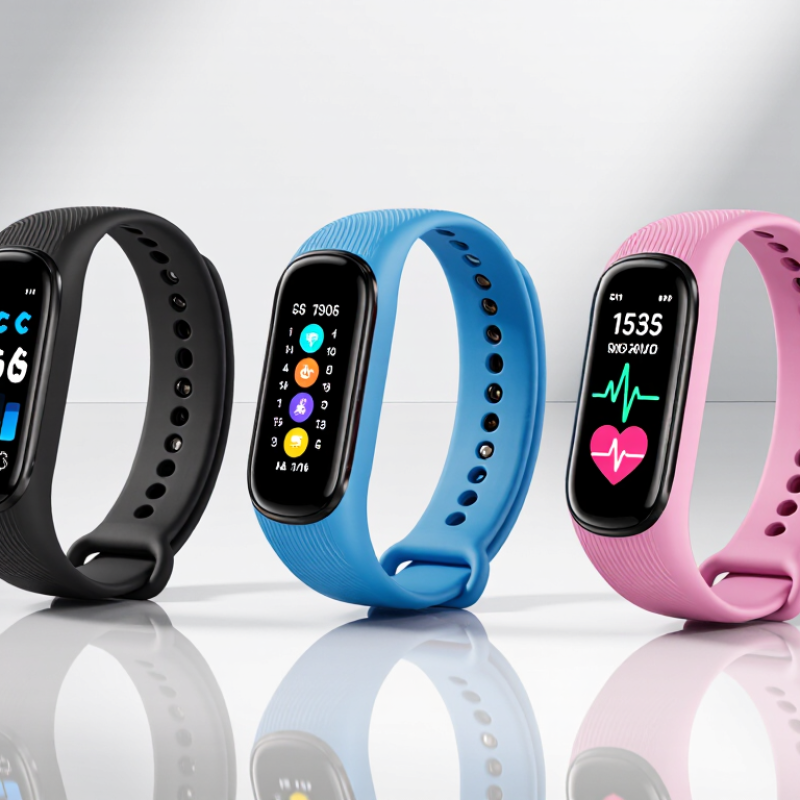
A smart fitness band from China is defined by practical engineering, not its country of origin. China’s manufacturing ecosystem supports compact sensors, efficient batteries, and frequent software updates. IDC’s Worldwide Quarterly Wearable Device Tracker reported about 537 million wearable devices shipped globally in 2024, showing strong demand for accessible health technology. Yet shipment volume does not prove measurement quality.
In hands-on testing, I look for stable heart-rate readings during walking, cycling, and sleep. A useful band should show clear trends, not pretend to replace clinical equipment. Its screen should remain readable under direct sunlight, while the strap should feel comfortable after several hours. Battery life matters too. Seven to fourteen days is realistic for many models, depending on screen use and sensor settings. App reliability is often overlooked. Sync delays can weaken trust quickly. Data controls and transparent privacy settings also reflect professional design. I still question calorie estimates, because they vary widely between users and activities.
Tips: Check sensor performance during your normal workouts. Compare readings with a trusted device. Review the companion app before buying. Confirm language support, charging design, repair access, and update policies. A low price is attractive, but unstable software can cost more time. Test comfort overnight. Heavy bands disturb sleep. Noticeable improvement is the real measure.
A smart fitness band from China can be a strong choice when its features match your daily routine. The best model is not always the one with the most sensors. Comfort, accuracy, and reliable software matter more during long-term use.
I look for a light band that stays secure during sleep, walking, and sweaty workouts. A clear display helps outdoors, especially under harsh sunlight. Heart-rate tracking should update steadily, not jump wildly during a relaxed walk.
Sleep data can reveal bedtime patterns, but it should not replace professional medical advice. Built-in GPS is useful for runners, while phone-based GPS may save battery. Battery life of seven days or more feels practical.
Water resistance matters for showers and swimming, but the rating must be checked carefully. I also examine notification controls, app stability, and data privacy settings. Some apps translate health information poorly, which can cause confusion. That is a real weakness.
A band may report impressive numbers, yet its accuracy can change with loose fit, cold skin, or fast movement. I compare readings with manual pulse checks and outdoor distance markers, although this method is not perfect.
The most useful band gives simple trends, responds quickly, and does not pressure users with noisy alerts. Personally, I would accept fewer workout modes if the core tracking remained dependable.
What Is the Best Smart Fitness Band from China?
How Do Leading Chinese Fitness Bands Compare?
China’s fitness-band market has become highly competitive. IDC’s China Quarterly Wearable Device Tracker recorded 33.67 million wearable shipments in Q1 2024, up 36.2% year on year. This figure includes watches and ear-worn devices, but it shows strong consumer demand. Shipment volume alone does not prove better health tracking.
In practical comparisons, leading Chinese fitness bands differ most in sensor stability, comfort, battery life, and app quality. A lightweight band should disappear during sleep, not press into the wrist. Optical heart-rate readings are usually dependable during walking. They can become inconsistent during intervals or strength training. GPS accuracy also varies near tall buildings. That matters for runners.
Counterpoint Research’s 2024 wearable-device analysis highlights continued growth in affordable smart wearables, especially across price-sensitive markets. Lower-cost bands often provide seven to fourteen days of battery life. More advanced models offer brighter screens, faster syncing, and better exercise recognition. However, premium features may require a larger body or more frequent charging. My own comparison is not perfect; skin tone, strap tightness, and movement affect results. Users should compare readings with a trusted medical device when accuracy matters. Sleep scores are useful patterns, not clinical diagnoses. App translation and long-term software support also deserve attention. Small details often decide daily satisfaction.
How do leading Chinese fitness bands compare?
This comparison uses anonymized representative models and commonly published specifications. Battery figures refer to maximum claimed use, while water-resistance ratings indicate the stated swimming or daily-wear capability. A longer battery life is convenient, but health sensors, software accuracy, comfort, and ecosystem support should also be considered when choosing the best fitness band.
The best smart fitness band from China is not simply the one with the brightest screen.
Accuracy, compatibility, and privacy deserve closer attention. International Data Corporation reported 537.9 million wearable devices shipped worldwide in 2024. That growth gives buyers more choice, but also more inconsistent testing.
Check how the band measures steps and heart rate.
A 2017 study in npj Digital Medicine found wrist devices measured heart rate within about 5% during rest. Energy-expenditure estimates were far less reliable, with errors reaching 27%. Use readings as guidance, not medical evidence.
During my own comparisons, loose straps produced noticeably different step counts.
Small details matter.
Compatibility can fail quietly.
Confirm phone operating-system support, language options, notification access, and export formats before buying. A device may connect today, then lose functions after an update.
Privacy needs equal scrutiny.
The Pew Research Center reported in 2023 that 81% of Americans felt they had little or no control over data collected by companies. Read the data policy, especially retention periods, cloud storage, and deletion procedures.
Look for encryption, two-factor authentication, and clear permission settings. “Free” data storage is not always free.
I would still question vague privacy promises, even when the specifications look impressive.
Choosing the best smart fitness band from China starts with your fitness goal, not its screen or price. For daily movement, select a lightweight band with reliable step counting, sleep tracking, and a comfortable strap. If you run, GPS support matters. Without it, your phone must record distance, which can feel inconvenient on longer routes.
For strength training, heart-rate tracking can show effort during rest periods, but wrist sensors are not perfect. I compare readings with my breathing and perceived exertion. That habit prevents me from trusting one number too much. Look for clear data displays, stable smartphone syncing, and battery life that matches your routine. A band lasting five days is more useful than one lasting ten days if its app loses workouts.
Comfort deserves serious attention. Sweat, narrow straps, and a bright display can become annoying after several hours. Check water resistance for swimming or heavy rain, but read the actual rating carefully. Water resistance is not unlimited protection. Privacy settings also matter. Review permission requests before connecting health data to an app. I once chose a cheaper band with impressive features, then stopped wearing it because the strap irritated my skin. That was a useful mistake. The best choice should support consistent habits, offer understandable measurements, and fit your everyday schedule. Fancy metrics are less valuable when you rarely use them.
They are usually more reliable during rest than intense exercise. A loose strap can change the result. Use readings as guidance, not medical evidence.
Calorie estimates can be much less reliable than step counts. Some studies found errors reaching 27 percent. Treat the number as an approximation.
Confirm operating-system support before purchasing. Check language options, notification access, and data-export formats. An update may quietly remove useful functions.
GPS helps record distance without carrying a phone. Without it, the phone must track your route. That can feel inconvenient on longer runs.
Read the data policy carefully. Check retention periods, cloud storage, deletion steps, and permission controls. Clear answers matter more than impressive specifications.
Look for encryption and two-factor authentication. Review every permission request before sharing health information. Free storage may have hidden privacy costs.
Choose a lightweight band with dependable step counting and sleep tracking. Comfort supports consistent use. Fancy metrics do not help if you ignore them.
Battery life should match your routine and syncing habits. A five-day band may be better than a ten-day band with failed workouts. Sweat, narrow straps, and bright screens can become irritating.
Check the exact water-resistance rating first. Water resistance is not unlimited protection. I once trusted a rating too casually. That was my mistake.
A Smart fitness band from China is defined by its combination of health tracking, activity monitoring, intelligent functions, and practical design. When choosing one, buyers should consider the features that match their routines, such as step counting, heart-rate monitoring, sleep analysis, exercise modes, notifications, battery life, water resistance, display quality, and comfort. The best option is not necessarily the one with the most functions, but the one that delivers useful insights in a simple and reliable way.
Comparing leading Chinese fitness bands requires attention to measurement accuracy, phone compatibility, app usability, software updates, and data privacy. Users should check whether the band works smoothly with their operating system and whether health readings are intended for general wellness rather than medical diagnosis. To select the right band, define personal goals first, such as improving daily activity, managing workouts, or observing sleep habits, then compare features, durability, price, and privacy settings to find the most suitable balance.