
China’s smart health market is expanding, and buyers increasingly seek reliable Smart body composition scale suppliers. The right supplier must offer more than attractive packaging or low factory prices. It should combine sensor accuracy, stable software, quality control, and responsive technical support.
Dr. Steven B. Heymsfield, a leading body-composition researcher, has stated, “Body composition is a key component of nutritional assessment.” This principle matters when evaluating Chinese manufacturers. A dependable scale should measure weight, body fat, muscle mass, water, and related indicators with clear limitations. It should also explain how algorithms produce results.
Look beyond the showroom sample.
Experienced buyers should inspect calibration records, production capacity, certification documents, and app performance. A supplier may provide a polished prototype, yet struggle with consistency during large orders. Factory visits, third-party testing, and sample comparisons can reveal these gaps. Data security also deserves careful attention, especially when scales connect through Bluetooth or cloud platforms.
The best supplier is not always the cheapest. Long-term value depends on stable readings, durable electrodes, simple user instructions, and practical after-sales service. Ask whether the supplier supports private labeling, API integration, multilingual applications, and replacement parts.
No supplier is perfect. Even strong factories may face software delays or communication problems. That is why transparent contracts, realistic testing, and regular quality reviews remain essential. This guide will compare leading Chinese suppliers through product capability, manufacturing experience, compliance awareness, customization support, and customer reliability.
What Is a Smart Body Composition Scale?
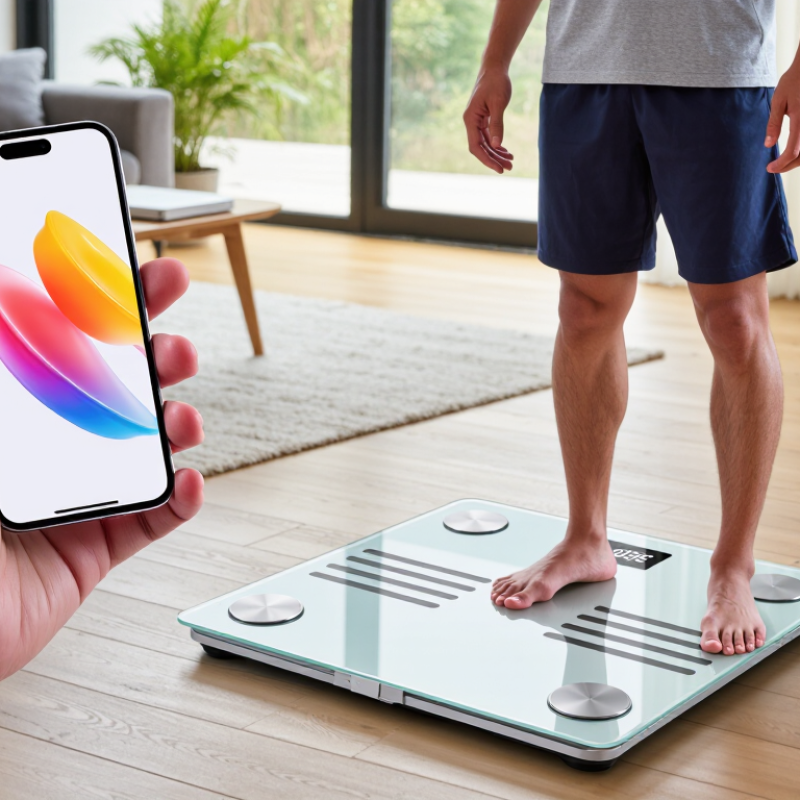
A smart body composition scale measures more than body weight. It usually uses bioelectrical impedance analysis, or BIA, to estimate body fat, muscle mass, body water, and visceral fat. A tiny electrical signal travels through the body through metal foot sensors. The scale then combines impedance, height, age, sex, and weight data.
The figures look precise. They are still estimates. Hydration, recent exercise, food, skin temperature, and foot position can change readings. A shower or salty meal may influence results. The U.S. Food and Drug Administration notes that consumer measuring devices require careful interpretation and should not replace professional assessment. Clinical methods, such as DEXA, remain more suitable for detailed body composition analysis.
The need is growing. The World Health Organization reported that 2.5 billion adults were overweight in 2022, including more than 890 million living with obesity. A smart scale can help users observe long-term patterns at home. It can connect with a mobile application and display weekly changes. Useful, but not perfect. In practice, consistent testing matters more than one impressive number. Measure at a similar time, on a hard floor, with dry feet, and compare trends over several weeks. A supplier with engineering expertise should explain algorithms, testing conditions, data protection, and measurement limits clearly. Fitness progress is not always visible on the display.
| Data Dimension | What It Measures | Typical Unit or Display | How the Data Is Obtained | Important Note |
|---|---|---|---|---|
| Body Weight | The total mass of the user at the time of measurement. | Kilograms (kg), pounds (lb), or stones (st) | Measured by load cells positioned beneath the platform. | Readings can vary with clothing, food intake, hydration, and floor surface. |
| Body Mass Index (BMI) | A weight-to-height ratio used as a general screening measure. | kg/m² | Calculated from body weight and user-entered height: weight ÷ height². | It does not directly measure body fat and may be misleading for some athletes, older adults, or growing children. |
| Body Fat Percentage | The estimated proportion of body mass that is fat tissue. | Percentage (%) | Usually estimated with bioelectrical impedance analysis (BIA), combined with profile information. | BIA results are estimates and can be affected by hydration, skin temperature, and foot contact. |
| Body Water | An estimate of the water contained in the body. | Percentage (%) or kilograms (kg) | Estimated from electrical impedance and user data. | It should not be used alone to diagnose dehydration or other medical conditions. |
| Skeletal Muscle Estimate | An estimate related to the muscle component that supports movement. | Kilograms (kg) or percentage (%) | Derived through proprietary or device-specific BIA equations. | Definitions and calculation methods differ between devices, so trends are more useful than isolated readings. |
| Visceral Fat Indicator | An estimate or rating associated with fat stored around internal organs. | Device-specific rating or index | Estimated using BIA algorithms; it is not directly imaged by the scale. | The rating is not a clinical measurement and should not replace professional health assessment. |
| Basal Metabolic Rate | An estimate of energy used by the body at rest to maintain basic functions. | Kilocalories per day (kcal/day) | Calculated from weight, height, age, sex, and sometimes body-composition estimates. | It is an estimate, not a direct laboratory measurement of daily energy expenditure. |
| Bone Mass Estimate | An estimated mineral-related mass component. | Kilograms (kg) | Calculated from device algorithms and impedance-related data. | It is not the same as bone mineral density and cannot diagnose osteoporosis. |
| Connectivity | The way measurement results transfer to a mobile device or digital platform. | Bluetooth, Wi-Fi, or app synchronization | Wireless communication sends readings to compatible software. | Compatibility, account requirements, privacy policies, and regional app support should be checked before purchase. |
| Measurement Consistency | The ability to compare readings over time under similar conditions. | Repeatability of trends | Improved by measuring at a consistent time, on a hard level floor, and with similar hydration and clothing. | A smart scale is generally more useful for monitoring personal trends than for making medical diagnoses. |
Smart body composition scales combine weight measurement, bioelectrical impedance analysis, user profile information, and digital connectivity to provide estimated body-composition data. Results are for general wellness tracking and should not replace advice from a qualified healthcare professional.
It measures body weight and estimates body fat, muscle mass, body water, and visceral fat. Not just weight.
It sends a tiny electrical signal through metal foot sensors. Water-rich tissue conducts electricity more easily than fat tissue. The scale combines resistance, height, age, sex, and weight data.
No. The figures are estimates, even when the screen shows many decimal places. They should not replace professional assessment or clinical testing.
Hydration, recent exercise, food, skin temperature, and foot position can affect results. A salty meal or cold feet may also change the estimate. Small details matter.
Measure at a similar time, on a hard floor, with clean and dry feet. Keep your foot position similar each time. Compare several weeks, not one result.
No. It can support personal tracking, but it cannot diagnose disease. More detailed evaluation requires suitable professional methods.
Common estimates include body fat percentage, skeletal muscle, body water, bone mass, and visceral fat. Weight is measured directly. The others are calculated.
The supplier should explain algorithms, testing conditions, sensor stability, electrical safety, and measurement limits. It should discuss repeatability and reference comparisons clearly. Perfect claims deserve skepticism.
A smart body composition scale is a connected device that estimates body weight, body fat, muscle mass, water percentage, bone mass, and other health-related indicators through sensors and electrical impedance technology. For buyers evaluating suppliers in China, important factors include product accuracy, measurement consistency, research and development capability, manufacturing capacity, quality control systems, customization options, communication efficiency, and delivery reliability. Certifications, testing reports, data protection practices, and compliance with the regulations of the target market should also be carefully reviewed.
Different suppliers may offer varying sensor designs, algorithms, mobile connectivity, and user data functions, so quality and technology should be compared through samples, test results, and long-term performance. The best supplier for a specific market should provide a suitable balance of price, functionality, safety, certification support, packaging, and after-sales service. By defining user needs and market requirements in advance, buyers can select a reliable Smart body composition scale supplier capable of supporting stable quality and sustainable business growth.